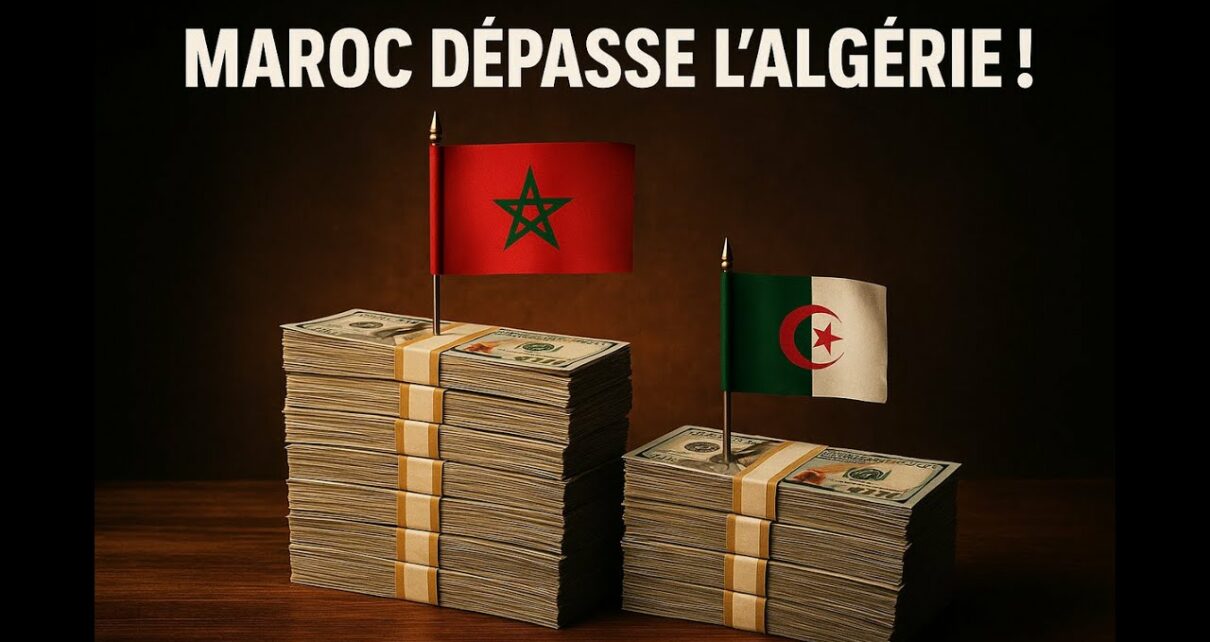
Morocco, a country with a diversified economy, has outpaced hydrocarbon-rich Algeria in foreign exchange reserves, reaching approximately $50 billion in September, according to central bank data.
This milestone underscores the success of Morocco’s diversified and productive economy, while exposing the costs of Algeria’s rentier economy which led to restrictive import policies and heavy reliance on subsidies to preserve fragile social peace.
The central bank data show Morocco’s official reserves climbing to around 502 billion dirhams (roughly $54 billion) in early September 2026, supported by strong automotive and industrial exports, tourism, remittances, and foreign investment.
Algeria’s reserves, by contrast, have hovered lower at some 46 billion dollars in recent reports, reflecting heavy dependence on energy revenues and policy choices that have constrained economic dynamism.
Unlike Morocco, which has built a more productive economy focused on industry, exports, and private-sector growth, Algeria spends far more on large-scale subsidies for basic products in an effort to maintain social calm.
These costly transfers, while politically expedient, divert resources from productive investment and leave the economy vulnerable when hydrocarbon revenues fluctuate.
At the same time, Algeria has for years enforced harsh restrictions on imports, justifying them as measures to protect and promote national industry. In practice, these policies were targeted at protecting reserves.
Restrictions have in fact jeopardized investors and severely hampered local industries that rely on imported components and raw materials.
The result has been chronic shortages across everyday goods and critical sectors. Supermarkets regularly face empty shelves for basic items such as milk powder, salt, and cooking oil.
Medicine shortages have also been reported, while the auto sector has been hit particularly hard.
Strict limits on vehicle imports and vital spare parts have left operators struggling to maintain fleets. The consequences have proven deadly. In August 2025, a bus plunged off a bridge into the heavily polluted Oued El-Harrach river in Algiers- a waterway long described as a sewage-filled hazard- killing 18 people and injuring dozens.
Critics linked the tragedy in part to the aging vehicle fleet and the scarcity of tyres and spare parts caused by import barriers.