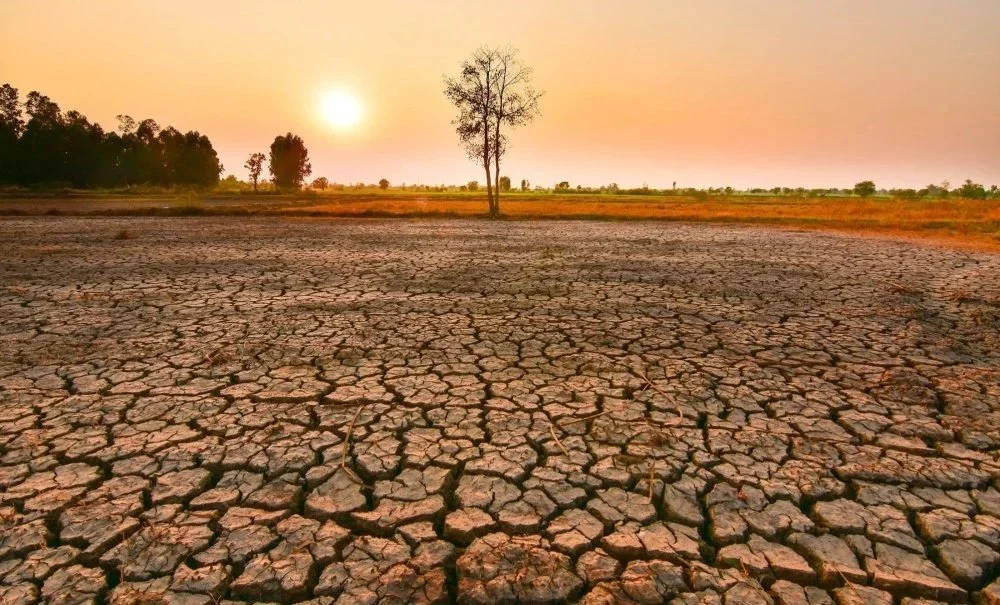
Morocco’s upcoming 2026-2027 agricultural campaign opens under a cloud of climate uncertainty, as a possible strengthening of El Niño over the coming months raises questions without pointing conclusively toward a drought scenario, Le Nouvelliste reports. The phenomenon involves abnormal warming of surface waters in the central and eastern tropical Pacific, effects that can alter atmospheric circulation and influence temperature and rainfall patterns across several regions of the world.
For Morocco, the key issue lies mainly in how rainfall will be distributed between autumn and winter. Certified agricultural expert Ibrahim El Anbi notes that El Niño’s influence on the Kingdom’s precipitation is not mechanical, with conditions in the Atlantic and Mediterranean and the trajectory of weather depressions also playing a determining role. This caution matters more given that the water situation has improved following last season’s rainfall, an encouraging trend that nonetheless does not rule out the risk of fresh rainfall deficits.
For crops, the central question is less the annual rainfall volume than its timing. Heavy but widely spaced rain episodes can prove less favourable than more moderate but regular rainfall, with cereals and other rain-fed crops particularly exposed to this variability; a delayed start to the rains or a lack of water during decisive growth phases can affect germination, growth and ultimately yields. Highly concentrated rainfall carries its own risks too, potentially causing flooding, worsening soil erosion or damaging crops and agricultural infrastructure.
Several scenarios remain possible for the 2026-2027 campaign: a regular distribution of rainfall could favour a good season, while alternating long dry spells with intense rain episodes could further complicate farm conditions. This uncertainty also concerns the Kingdom’s water security, with Morocco continuing to invest in seawater desalination, interconnecting river basins and reusing treated wastewater.
Within the agricultural sector, adaptation also involves better soil and water management, adopting crops better suited to climate conditions, and developing forecasting and early-warning systems. As the new campaign approaches, El Niño’s evolution will be closely monitored, though Le Nouvelliste notes it alone will not determine the season’s outcome, with rainfall regularity remaining the main factor to watch.