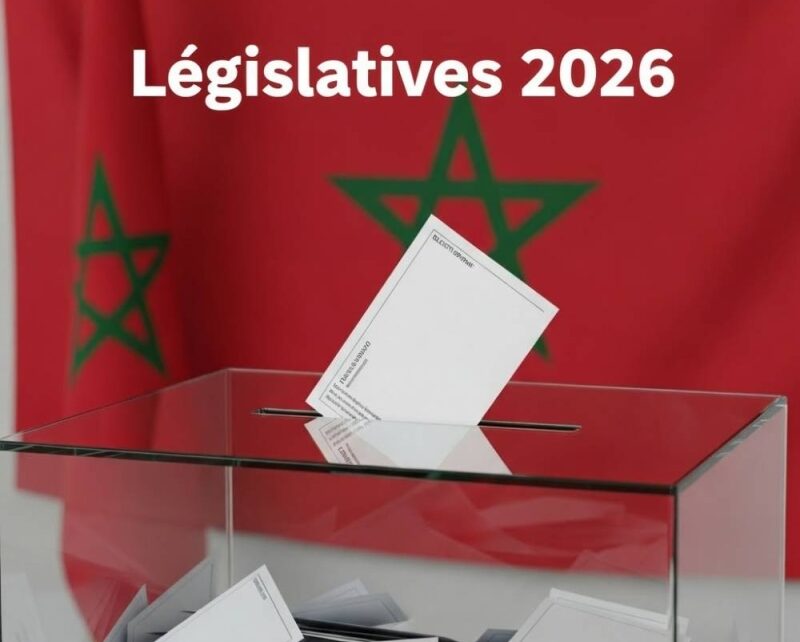
Weeks ahead of Morocco’s legislative elections, political parties have already taken to the field with local meetings, public statements and social media videos, each trying to win over an electorate that has shown growing distrust of institutional politics in recent years, political scientist Aisha Kadaoui writes in a Telquel opinion piece. Behind this pre-electoral activity, she argues, lies a harder question: what are parties actually doing to rebuild trust?
Kadaoui opens with a recent exchange in Ouarzazate, where PJD Secretary-General Abdelilah Benkirane, confronted by an attendee who said he had lost faith in political parties, reportedly shot back sarcastically, asking why the man had bothered showing up if he’d lost confidence, adding that “we don’t talk to those who’ve lost trust.” Beyond the controversy the remark stirred, Kadaoui asks what a political actor should do when told they are no longer trusted: ask why the person is still there, or ask why they stopped believing. She notes the distinction reflects two conceptions of politics, one treating trust as a precondition for participation, the other seeing politics as beginning where trust has cracked.
Kadaoui argues pre-campaign politicking has become almost caricatural, built around chasing local notables and influential figures who can mobilize votes rather than engaging with what the population actually needs. She contends this reduces the electoral contest to vote-capture logic, leaving little room for genuinely understanding a population parties meet mainly around election time.
Yet Kadaoui pushes back against reading this as a wholesale exit from politics. Citing Morocco’s Gen Z movement, she argues part of the country’s youth has rejected conventional politics, parties and elected officials, but has shifted into more informal arenas rather than disengaging altogether, generating its own discourse and forms of protest, often laced with sarcasm masking deep disillusionment.
Kadaoui also identifies a language problem: politicians can speak citizens’ dialects while staying disconnected from their concerns, deploying abstract terms like “development” or “youth support” that mean little against citizens’ concrete daily demands. She writes that all parties promise change and proximity, leaving voters unable to distinguish between competing offers, and concludes that reducing this crisis to a communication problem misses the point: what is needed is genuine representation, not merely better-produced campaign videos.