The recent migration crisis at Ceuta has triggered a wave of anti-Moroccan rhetoric in Spain, rooted in centuries-old historical traumas rather than current events alone.
The warmongering and hostility displayed by segments of the Spanish media and political spectrum goes far beyond a spontaneous reaction to the July events in the Spanish enclave.
Since the Ceuta incident, anti-Moroccan hatred went beyond a spontaneous reaction and awakened the old demons of a Spanish society whose history and identity were built in antagonism with the enemy from the South.
In contrast, there is a tendency in Morocco to emphasize shared history and culture with the deeper roots of conflict, frustration and resentment on the Spanish side of the Strait of Gibraltar.
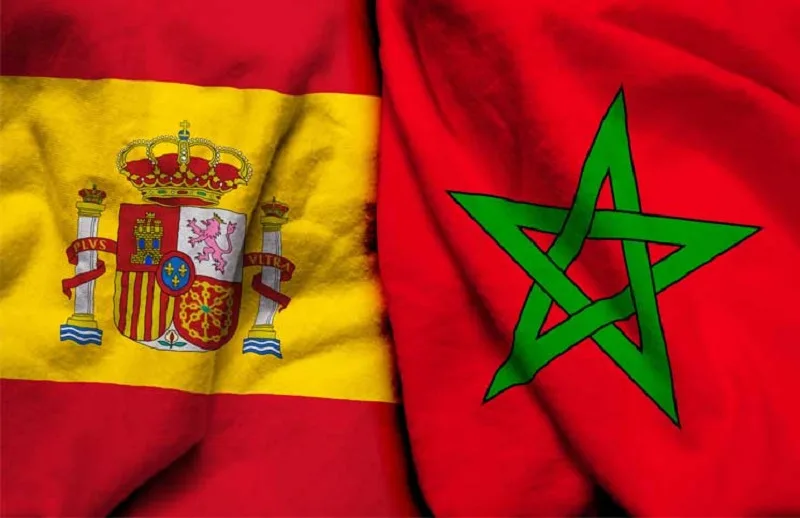
When Morocco won the joint bid to organize the 2030 World Cup with Spain and Portugal, the event was celebrated in Rabat as a bridge reconnecting three Mediterranean countries with shared history.
However, the avalanche of hateful speech among Spanish political class and media indicates that the reconquista mentality is still alive.
The obsessive distrust expressed by influential Spanish circles in the wake of the migration crisis has long been present, surfacing during waves of Moroccan emigration in the 1980s, the 2004 and 2017 terrorist attacks in Spain, and the 2002 Perejil/Leila islet crisis. The underlying narrative often frames Spain as having a duty to undermine or contain Morocco.
Compounding the problem, some Spanish media outlets have invited Polisario Front propagandists, presenting them as neutral “Morocco experts.” These appearances have given such figures a platform to attack the Kingdom, recycle long-discredited claims and spread falsehoods about Moroccan policy and society.
the current media and political discourse is not merely conjunctural but reflects stereotypes and anti-Moroccan historical interpretations that remain deeply embedded in parts of the Spanish collective imagination.