A rare cross-party coalition in Spain has called for Morocco’s exclusion from co-hosting the 2030 FIFA World Cup, treating the global governing body as if it were a family heirloom, even as the joint Spain-Portugal-Morocco bid succeeded largely thanks to African support secured by Rabat.
Right-wing Vox, left-wing Sumar and Podemos, and elements of the Popular Party have converged in demanding Morocco be sidelined from key matches, particularly the final.
The unusual alignment spans the political spectrum and has turned a sporting partnership into a domestic political weapon.
The Popular Party, eyeing 2027 elections, has suggested Spain should reconsider its participation if FIFA awards the final to Morocco.
While Morocco remains a valued partner for counter-terrorism, border control and intelligence sharing, the same partner is suddenly deemed unfit when football’s biggest prize is at stake!
Spanish politicians treat the kingdom as useful for security but subordinate when it claims a fair share of the tournament.
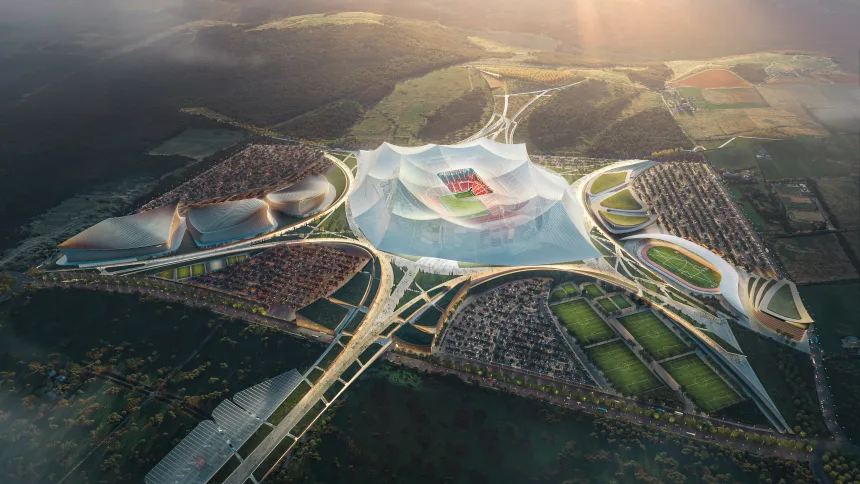
Morocco is not seeking to monopolize the centenary World Cup. It is requesting six stadiums, an equitable distribution of matches and the legitimate ambition to host the final at the Grand Stade Hassan II in Casablanca, a venue that could also serve as Africa’s showcase stadium.
The final itself has not yet been awarded by FIFA. The original “Yalla Vamos” joint bid was designed as a three-nation project linking two continents and celebrating a century of football. Morocco’s contribution was decisive. Thanks to its diplomatic outreach, Rabat gathered crucial African and Arab support that helped secure the bid’s victory.
Treating Rabat as a junior partner now undermines the very spirit that made the candidacy successful. While Spanish parties quarrel over Madrid versus Barcelona and use Morocco as a convenient distraction from internal fractures, Rabat continues building world-class infrastructure.
The kingdom is not asking for a gift. It is asserting the right to compete on merit within a shared project. The political theatre in Spain risks transforming a historic opportunity for regional cooperation into a zero-sum domestic contest. A candidacy built by three equal partners cannot function if one is expected to remain silent once the votes are counted.