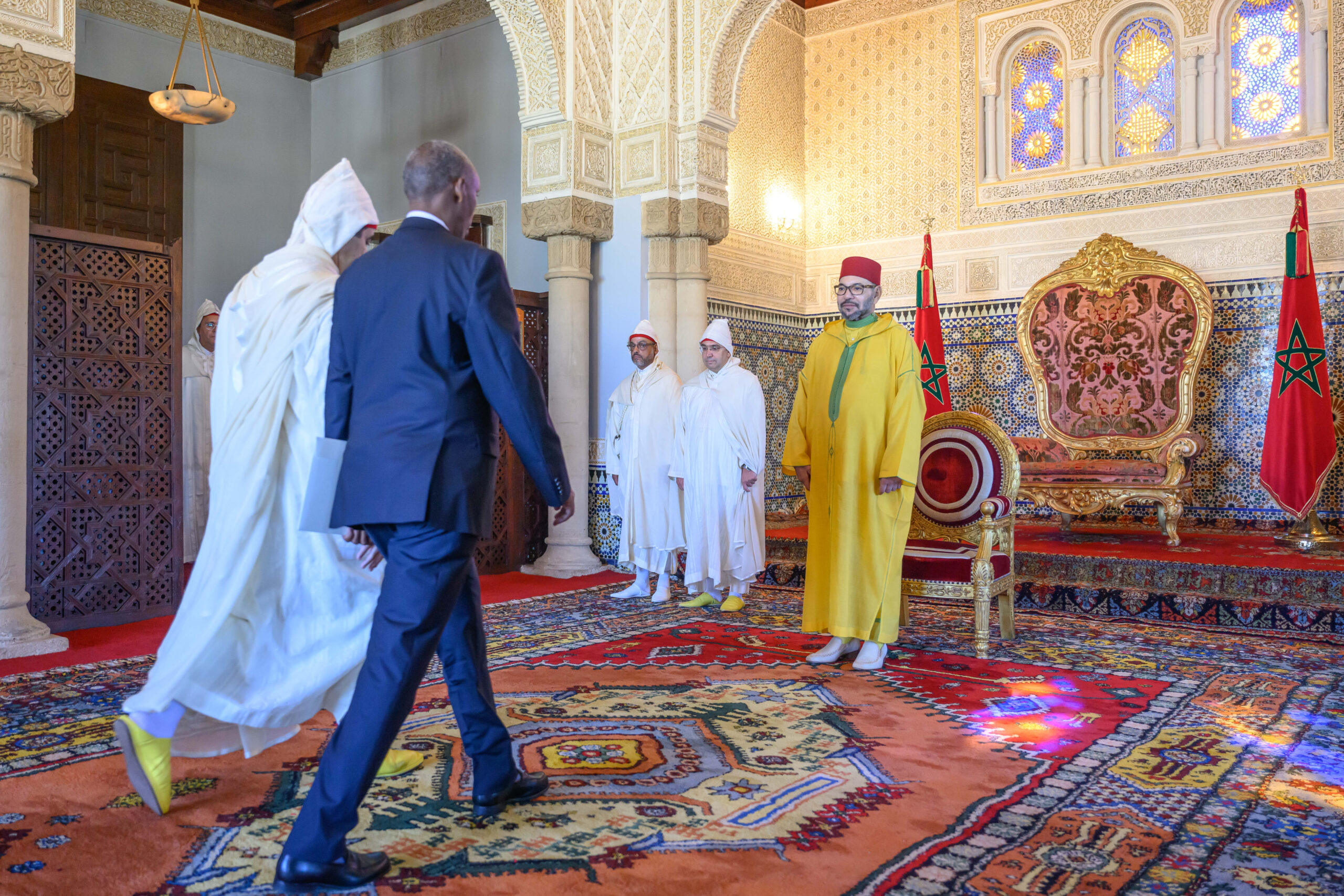
Under the leadership of King Mohammed VI, Morocco has pursued one of the most ambitious energy transitions in Africa, transforming itself from a country heavily dependent on imported energy into a regional hub for renewable power, cross-border interconnections, and continental energy partnerships.
Over the past two decades, the Sovereign has made energy security and sustainability central pillars of Morocco’s development model.
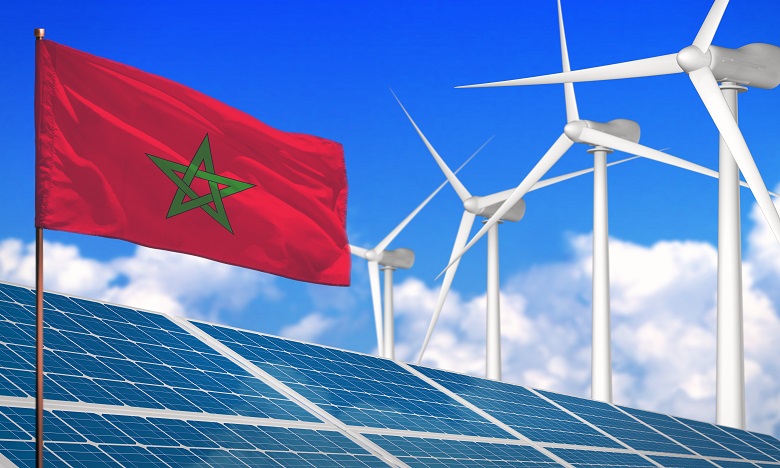
The Kingdom has set a target of increasing renewable energy beyond 52% of installed electricity capacity by 2030, positioning itself among the leading energy-transition economies in the developing world.
Morocco’s renewable energy journey accelerated under the King’s leadership with flagship projects such as the Noor Ouarzazate Solar Complex, one of the largest solar power installations globally, alongside major wind farms spread across several regions of the Kingdom.
These investments have steadily increased Morocco’s renewable generation capacity and reduced dependence on imported fossil fuels. Currently, renewable energy capacity stands at 47%.
The momentum continued in 2026 as international institutions reinforced their confidence in Morocco’s green transition. In April, the World Bank approved a $500 million financing package to support Morocco’s Jobs and Green Growth agenda, with a particular focus on renewable energy, energy efficiency, private-sector investment and industrial competitiveness.
King Mohammed VI’s energy vision has also focused on strengthening Morocco’s role as a strategic bridge between Africa and Europe.
The Kingdom is currently connected to Spain through two electricity interconnections crossing the Strait of Gibraltar, making Morocco the only African country physically linked to the European electricity network.
The two neighbors are planning a third link that will raise the interconnection capacity to 1500 MW. With Portugal and France, Morocco is also planning to separate links.
These interconnectors have become a cornerstone of Morocco’s ambition to position itself as a future exporter of clean energy and a key energy gateway between the two continents.
Morocco has further deepened cooperation with European partners through major green-energy initiatives. The European Union’s Global Gateway program is expected to mobilize approximately €5.5 billion in investments across strategic sectors in Morocco, including renewable energy, electricity-market integration and green infrastructure.
In May 2026, Morocco and Norway signed a landmark climate and renewable energy cooperation agreement under Article 6 of the Paris Agreement. The partnership could support around 2 gigawatts of renewable energy and storage capacity in Morocco while attracting additional investment into the Kingdom’s clean-energy sector.
Alongside its renewable energy ambitions, Morocco has advanced a complementary strategy aimed at strengthening long-term energy security through natural gas.
African Atlantic Gas Pipeline
At the heart of this strategy is the African Atlantic Gas Pipeline, a flagship project launched in 2016 following discussions between King Mohammed VI and former Nigerian President Muhammadu Buhari. The project embodies the King’s vision of South-South cooperation and regional integration, linking African energy resources to regional and international markets.
The pipeline, estimated at approximately $25 billion, would stretch nearly 6,900 kilometers along Africa’s Atlantic coast, crossing more than a dozen West African countries before reaching Morocco.
With a planned transport capacity of up to 30 billion cubic meters of gas annually, it is expected to contribute to electricity generation, industrialization, and energy access across participating countries while eventually serving European markets.
A major breakthrough was achieved last week when member states of the West African economic community (ECOWAS) signed an intergovernmental deal endorsing the project.
The agreement is expected to pave the way for the creation of a joint project company, financing mechanisms and a multinational regulatory structure involving participating countries.
The pipeline is widely viewed as one of Africa’s most transformative infrastructure projects, reinforcing Morocco’s emerging role as a continental energy hub linking West Africa, Europe and global markets.