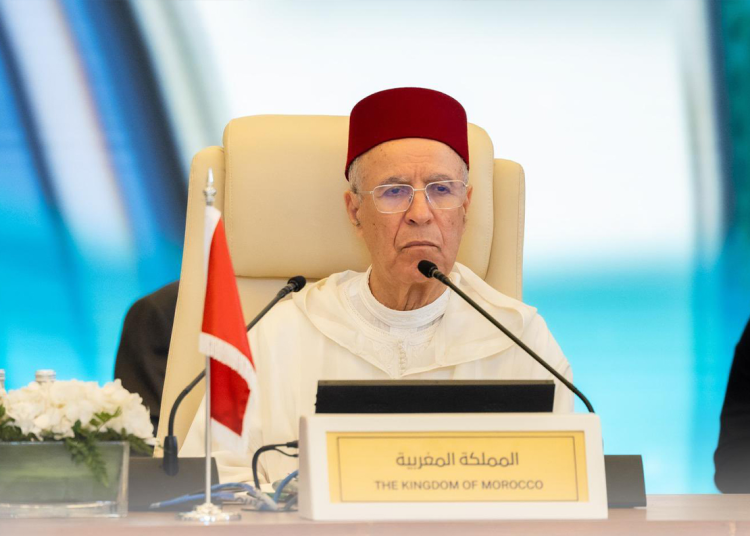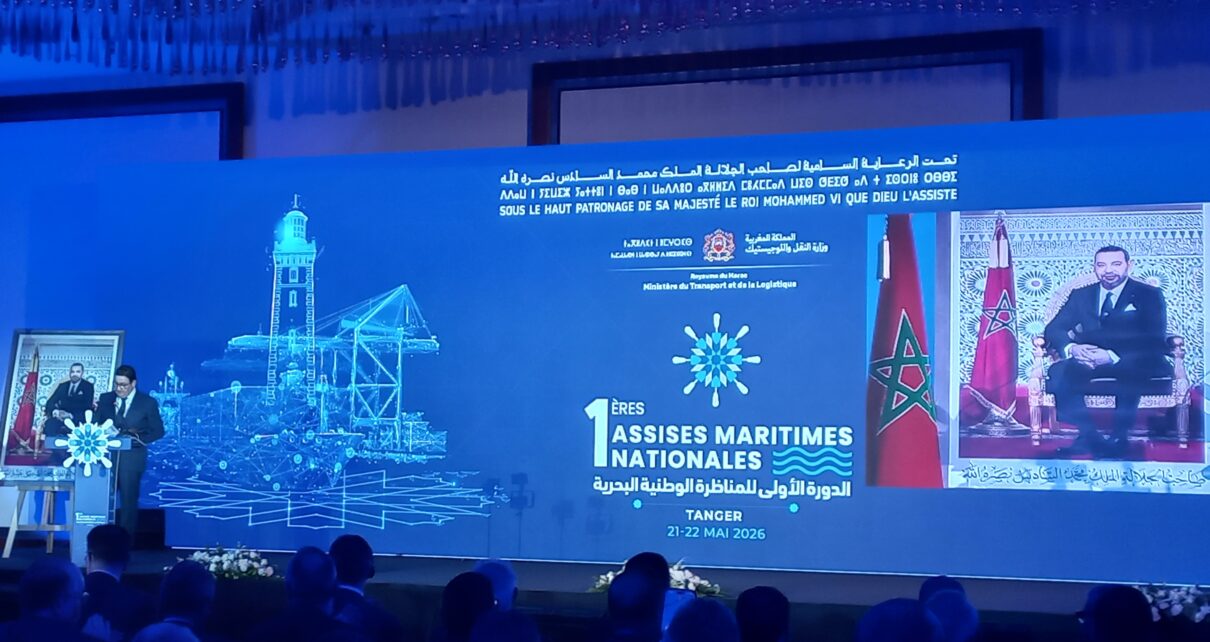
Transport and Logistics Minister Abdessamad Kayouh used the inaugural edition of Morocco’s Maritime Forum, held in Tanger under the theme “Morocco, an Emerging Maritime Nation,” May 21-22 to announce a set of concrete measures designed to expand the country’s maritime connectivity across the Atlantic and through the Strait of Gibraltar. The event marks the first institutional gathering dedicated exclusively to maritime strategy and signals the government’s intent to treat shipping as a core dimension of its logistics sovereignty agenda.
The most operationally significant announcement was the launch of a first tranche of tenders for new passenger and truck transport lines through the Strait of Gibraltar, aimed at reinforcing and diversifying maritime services between Morocco and Spain. In the Marhaba operation — the annual summer holidays program for the Moroccan diaspora —approximately 3.7 million passengers and 800,000 vehicles cross the strait of Gibraltar annually, and capacity constraints during peak periods have long been a source of logistical and consular friction. The new tenders are explicitly framed as a response to that structural bottleneck and as a lever for improving freight fluidity toward European markets.
The second major announcement concerns the ports of Agadir and Dakhla. Kayouh confirmed that the ministry is preparing new direct maritime lines connecting both cities to European, African, and Atlantic ports — a move that would integrate the southern provinces into the primary circuits of Atlantic maritime trade for the first time at scale. The minister described these connections as enabling exporters in the south to access international markets on competitive terms, and positioned them within his broader vision of Morocco as a strategic bridge between Europe, Africa, and the Atlantic space.
Both initiatives build on Morocco’s substantial two-decade investment in port infrastructure: Tanger Med, Nador West Med, Dakhla Atlantique, and the modernised ports of Casablanca, Jorf Lasfar, and Agadir. Kayouh cited a strategic study commissioned by the Ministry that concluded that a competitive national merchant fleet requires an integrated maritime ecosystem combining governance, financing, training, and logistics services. The Gibraltar and Agadir-Dakhla tenders represent the first operational translations of that conclusion.
The minister underlined that maritime transport carries over 90 percent of global trade volumes and that close to 95 percent of Morocco’s own external commercial flows pass through maritime channels. In this context, he framed the development of shipping capacity not merely as a logistics upgrade but as a dimension of economic resilience and logistical sovereignty — the same language the government has been using to frame its strategic storage, energy, and industrial policies in the face of ongoing global supply chain volatility.