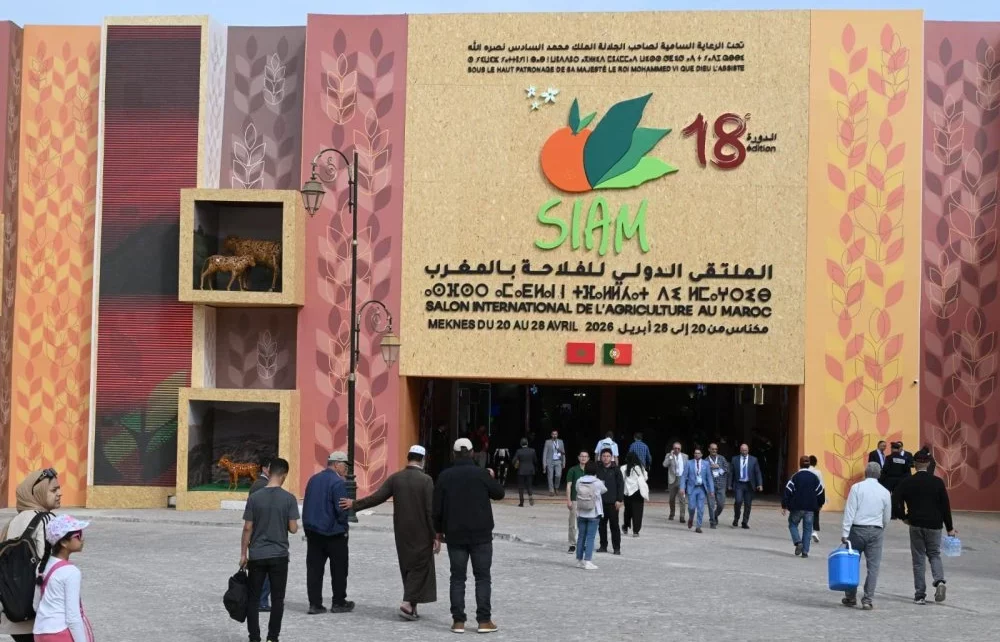
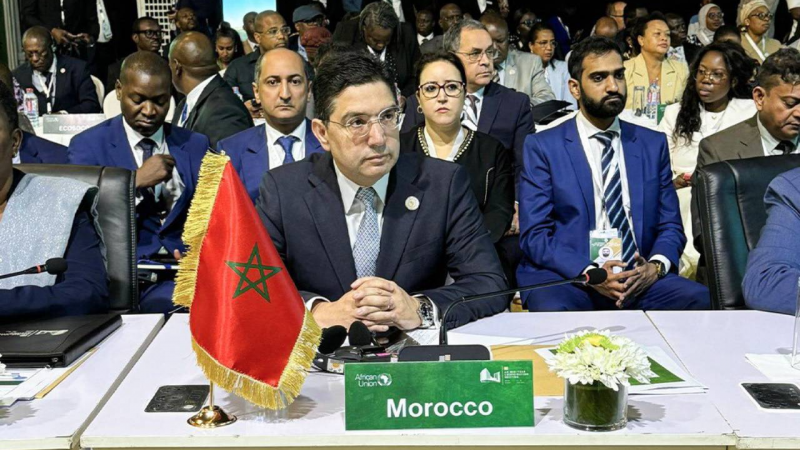
The Food and Agriculture Organization of the United Nations has publicly designated Morocco as a reference country for the transformation of agri-food systems and a leading model for South-South cooperation in the agricultural domain. The recognition was delivered on Saturday at SIAM 2026 in Meknès by Alexandre Huynh, the FAO’s Representative in Morocco, during a high-level panel convened on the sidelines of the salon’s 18th edition.
Huynh described Morocco as one of the countries advancing “with determination and concretely” on agri-food system transformation, to the point of constituting a model that other developing nations — particularly in Africa — are looking to for guidance and partnership. The declaration carries institutional weight: the FAO’s country representative is not a figure given to diplomatic exaggeration, and the framing of Morocco as a South-South reference reflects an assessment grounded in the organization’s own field observations across the continent.
Two pillars underpinned the FAO’s assessment. The first is Morocco’s demonstrated capacity to maintain a long-term strategic vision for agriculture regardless of short-term conjunctural pressures. The Green Generation 2020-2030 strategy, which succeeded the Green Morocco Plan, has provided continuity of direction across successive governments, weathering drought cycles, commodity price volatility, and post-pandemic disruption without abandoning its structural reform objectives. The FAO representative cited this consistency as an essential ingredient of Morocco’s credibility as a developmental model.
The second pillar is multi-sectoral coordination. Huynh emphasized that the transformation of agri-food systems is inherently complex and that its success depends on the ability of ministries, regulatory bodies, extension services, cooperative structures, and private-sector actors to work within a common framework. He noted that Morocco is actively consolidating this coordination — a process that the FAO views as directly replicable in other countries at comparable stages of agricultural development.
The designation arrives at a moment when Morocco’s agricultural credentials are particularly strong. The country is heading into one of its best harvest seasons in years, with a cereal output projected at nearly 90 million quintals, dam reservoirs at 76 percent capacity, and strong performance across tree crops and livestock. SIAM 2026 itself — drawing 70 countries, 1,500 exhibitors, and an expected 1.1 million visitors — provides the backdrop against which the FAO’s recognition lands with maximum strategic resonance for Morocco’s image as a serious and ambitious agricultural nation.