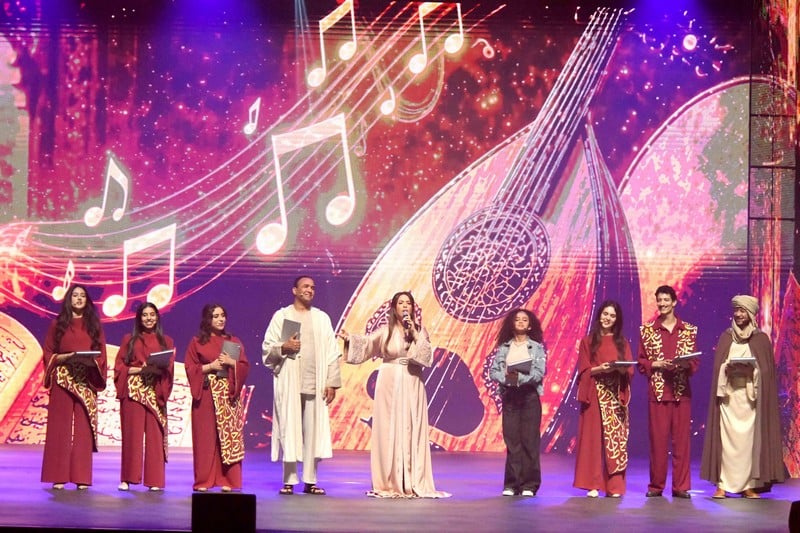
A splendid ceremony, highlighting the harmonious blend of heritage and modernity, took place Friday night in Rabat, marking the official launch of “Rabat, World Book Capital 2026,” an event promoting reading and intercultural dialogue.
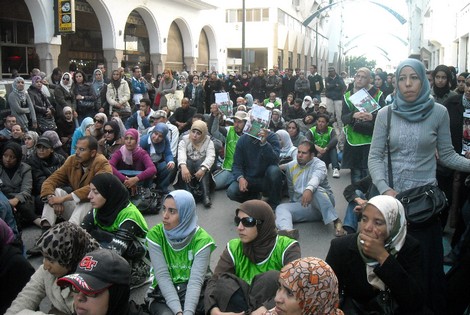
The ceremony, preceded by a reading parade through the streets of the capital, started by Rabat receiving the ceremonial “Book” torch from the Brazilian capital, Rio de Janeiro, which held the World Book Capital title last year.
The ceremony featured artistic performances that melded choreography, music, drama, and calligraphy, reflecting the deep roots of reading and books in both universal and Moroccan history, and celebrating Moroccan heritage and the history of humanity—from the earliest drawings engraved in Moroccan caves to the evolution of writing systems in the Sumerian and Pharaonic eras, as well as the Libyco-Amazigh script (ancestor of Tifinagh), Arabic script, and Latin script. The ceremony also paid tribute to books and reflected on them in multiple languages.
During the event, Alexandre Guimarães Lopes Parola, Brazil’s ambassador to Morocco, delivered a speech on behalf of the city of Rio de Janeiro, handing over the “title” to Rabat. He emphasized that this distinction is not merely symbolic, but rather “a mission to act and an expression of shared commitment (…) to make the book a living experience that enables dialogue between generations.”
“Over the past year, we embraced this responsibility by placing books at the heart of the city—in libraries, neighborhoods, and public spaces (…) and this year it is Rabat’s turn, as an African and Arab capital (…) to carry this forward with strength (…) because literature is a space of freedom where borders open (…) to build a shared future, enrich our collective history (…) and embark on a journey of words,” the Brazilian diplomat said.

Speaking at the event, Charaf Ahmimed, Director of the UNESCO Regional Office for the Maghreb, observed that Rabat—a UNESCO World Heritage site—fully embodies the dialogue between heritage and modernity, serving as a dynamic hub for the exchange of ideas and the transmission of knowledge.
The city is well-positioned to make culture a living force, he said, praising a clear vision aimed at establishing the capital as a crossroads of cultures and consolidating the role of books in the lives of younger generations.
Ahmimed noted that books strengthen humanity’s ability to navigate difficult periods and meet a real need deeply rooted in the human spirit. He welcomed the close cooperation between Morocco and UNESCO, which places culture at the heart of development.
Moroccan Minister of Culture Mehdi Bensaid on his part noted that Rabat’s designation is “not merely an honorary title, but international recognition of Morocco’s status as a beacon of thought and a bridge for intercultural dialogue.”
He explained that this choice honors the vision of King Mohammed VI, who views culture as a lever for development and knowledge as a fundamental right for every citizen.
In this regard, he vowed an exceptional program aimed at bringing books out of institutional settings and into public spaces, transforming the city into an “open-air library” where world literature meets unique local heritage.
The “Rabat World Book Capital” event offers an extensive program comprising 342 diverse activities across various sites, all aimed at promoting a “reading citizenship” and fostering a flourishing cultural industry.
The program includes a myriad of activities organized around 12 strategic axes, notably: open-air reading sessions and literary cafés, art exhibitions and mobile libraries, literary residencies and professional conferences, and training sessions and workshops for book industry professionals.
UNESCO’s designation of Rabat is based on an in-depth evaluation of historical, intellectual, and cultural criteria, drawing on the city’s centuries-old connection to books and the transmission of knowledge.
This legacy, evidenced by its mosques and libraries that bear the indelible mark of a living cultural tradition, has been further enriched by modern institutions, including contemporary universities, specialized institutes, and a dynamic civil society.
The designation by the UNESCO of Rabat as World Book Capital crowns the city’s thousand-year history, its long-standing commitment to culture and education, and the dynamism of its book sector.
With more than 54 publishing houses and a growing number of bookshops, Rabat is one of the key drivers of the democratization of knowledge.
World Book Capitals undertake to promote books and reading for all ages and groups, both within and beyond national borders, and to organize a program of activities for the year.
Rabat, the twenty-sixth city to hold this title since 2001, succeeds Madrid (2001), Alexandria (2002), New Delhi (2003), Antwerp (2004), Montreal (2005), Turin (2006), Bogotá (2007), Amsterdam (2008), Beirut (2009), Ljubljana (2010), Buenos Aires (2011), Yerevan (2012), Bangkok (2013), Port Harcourt (2014), Incheon (2015), Wrocław (2016), Conakry (2017), Athens (2018), Sharjah (2019), Kuala Lumpur (2020), Tbilisi (2021), Guadalajara (2022), Accra (2023), Strasbourg (2024) and Rio de Janeiro (2025).