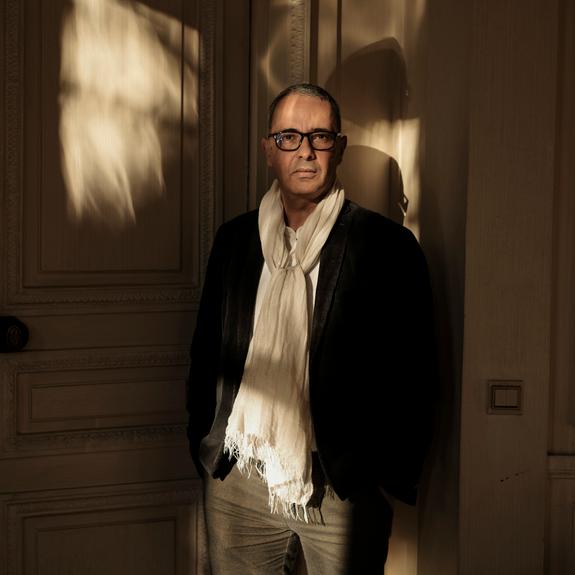
Algerian authorities have sentenced French Algerian writer Kamel Daoud to three years in prison in absentia and fined him €35,000, in a ruling critics say epitomizes the regime’s sustained effort to suppress debate about the country’s civil war.
Daoud, who won the 2024 Prix Goncourt for his novel Houris, announced the verdict on his X account.
The decision was handed down under Algeria’s Charter for Peace and National Reconciliation, a 2005 law designed to close the file on the 1991–2002 civil war, a conflict that killed an estimated 200,000 people dead and left many questions unanswered regarding the role of the military regime in the carnage.
The same charter criminalizes discussion of state crimes and bars any investigation into abuses committed during what is commonly known as the “black decade.”
In Houris the novelists confront the trauma, silence and moral void left by a conflict the Algerian state insists must remain unexamined. The book is banned in Algeria, and its author has been subjected to sustained attacks in pro regime media.
Daoud’s conviction reflects a broader state-enforced blackout on the civil war, aimed at shielding the military-backed regime from scrutiny over its role in one of the bloodiest episodes of Algeria’s post independence history. The regime now prosecutes memory rather than perpetrators, punishing writers while granting amnesty to thousands of former fighters.
The case of Daoud echoes that of Boualem Sansal, another prominent Algerian writer living in exile, who suffered arbitrary detention in Algiers for his views and whose works revisiting taboo historical questions have also drawn persecution.
The persecution of writers who question the regime’s narrative shows that in Algeria, history remains a controlled space, and those who challenge the official version face judicial punishment.