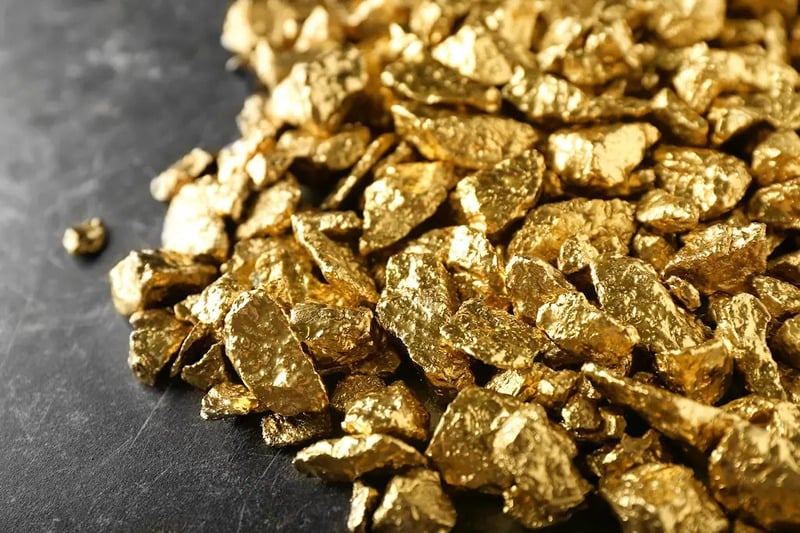
As gold prices shatter historic records on global markets — now trading durably above $5,000 per ounce — the surge is reigniting an old ambition in Morocco: unlocking the kingdom’s long-dormant auriferous potential. But how much gold does Morocco actually have, and what can it realistically produce?
The current gold rally is no fleeting phenomenon. Analysts point to structural drivers, chiefly rising geopolitical tensions in the Middle East and sustained demand for safe-haven assets, as the forces keeping prices elevated. For Morocco, the timing is stirring renewed conversation about what lies beneath its soil.
Domestic gold production today is modest at best. Operations are centered on the Tiouit mine in Tinghir province, south of Boumalne-Dadès, where tailings are reprocessed through cyanidation to recover residual gold. Annual output barely exceeds one hundred kilograms. Meanwhile, Managem Group — Morocco’s leading mining conglomerate — produces roughly five tonnes of gold per year, but that figure reflects its African operations abroad, not domestic extraction.
The group’s Akka mine, once the crown jewel of Moroccan gold production with peak output of 2.6 tonnes annually between 2002 and 2006, was shut down after reserves were exhausted and has since been repurposed for copper recovery from metallurgical slag.
Looking ahead, the picture grows more optimistic. Morocco’s mineral index map reveals around thirty auriferous sites, concentrated in the country’s southern and eastern regions. More than six companies are currently pursuing gold exploration projects. Among the most promising is Tiouit-area work by Stellar AfricaGold, whose recent drilling at the Tichka Est project confirmed gold mineralization reaching 6.12 g/t in fractured diorites.
The Boumadine mine in Tinejdad, slated for commissioning around 2030, is another key development. It will exploit a polymetallic concentrate rich in lead, zinc, silver, and gold. Feasibility studies are even exploring the creation of a domestic smelter to refine gold locally, which would significantly enhance project profitability.
State agency ONHYM is also actively promoting two gold projects near Tafraout — Afoud, with grades up to 5.8 g/t, and Tizeggouine-Moumjjoud, where concentrations can reach an impressive 27 g/t. The Tafilalet and Figuig mining region, historically known for lead, is equally drawing renewed interest following confirmation of auriferous traces at the Tamelalt mineral deposit near Bouarfa.
While Morocco’s proven reserves appear limited, advancing exploration technologies and sustained high gold prices may yet reveal what the subsoil has long been keeping secret.