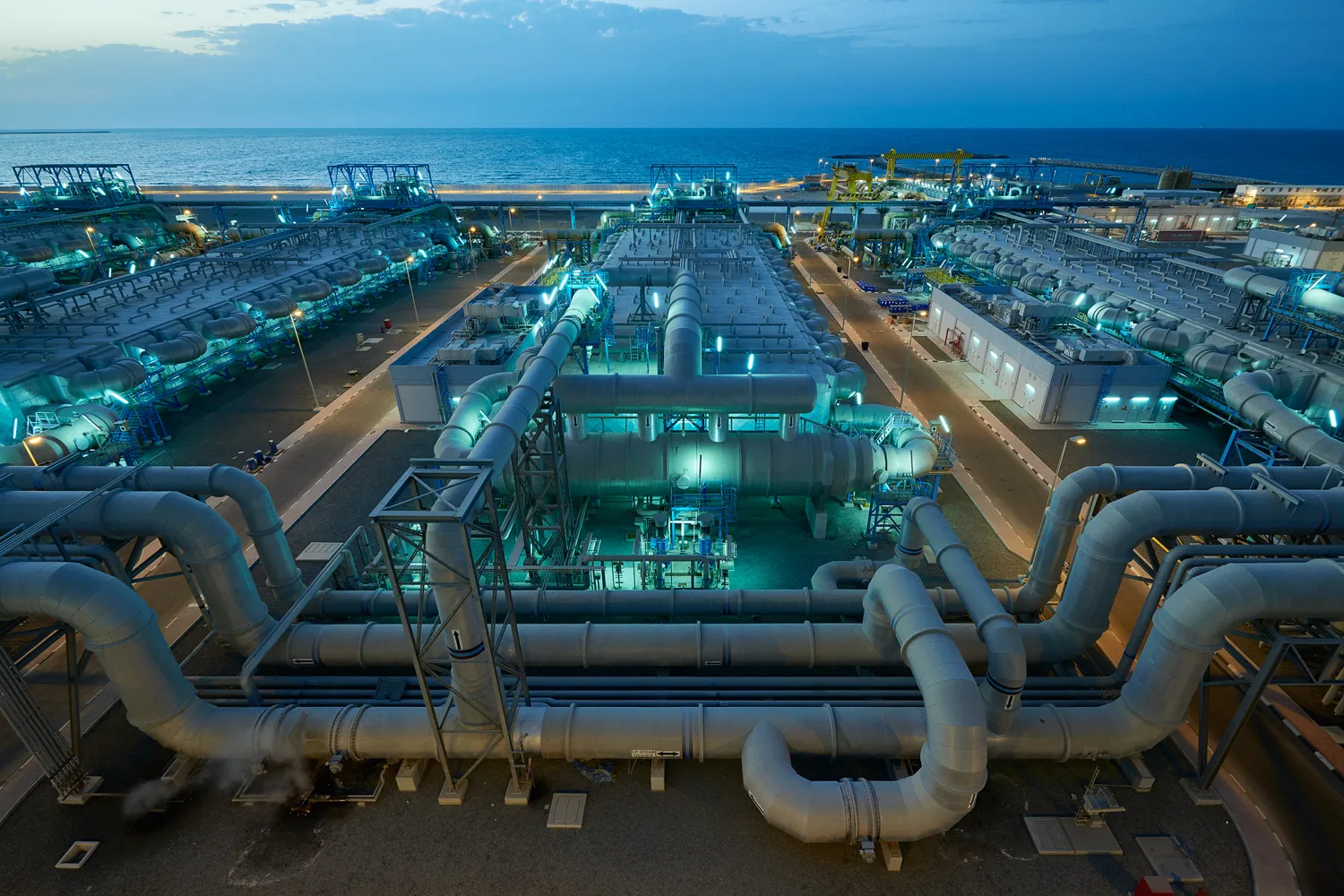
After enduring one of the most severe drought cycles in its history over the past seven years, Morocco is industrializing its response to water scarcity through an ambitious desalination expansion. According to research firm Renub Research, the Moroccan desalination market is projected to double from $400 million in 2024 to $850 million by 2033, growing at an average annual rate of 8.74 percent.
The centerpiece of this transformation is rising near El Jadida, where Africa’s largest desalination plant is under construction on a 50-hectare site. Once completed, the facility will supply 7.5 million residents across Greater Casablanca and surrounding regions, producing up to 822,000 cubic meters of drinking water daily by 2028 — powered entirely by renewable energy. The $650 million project operates under a public-private partnership model. Further along the coast, operational plants in Agadir and Nador already serve millions, while a new facility in Safi is under development.
Morocco’s 3,500-kilometer coastline provides a decisive geographic advantage for multiplying plant locations. Equally important, the country’s pioneering investments in solar and wind energy allow it to address desalination’s historically prohibitive energy costs while meeting climate commitments. Advanced reverse osmosis technology, digital monitoring, and predictive maintenance further improve efficiency across new installations.
However, Renub Research identifies four structural challenges that could constrain progress. Financing remains daunting, with each plant requiring hundreds of millions in upfront investment plus distribution infrastructure. Energy intermittency poses risks despite renewable integration. Environmental concerns around brine discharge threaten marine ecosystems if poorly managed. Finally, a shortage of specialized engineers and technicians could bottleneck operations as facilities multiply.
Morocco targets 1.5 billion cubic meters of annual desalination capacity by 2030, attracting major international players including Veolia, Doosan, and Aquatech. The bet is clear: innovation and investment can push back the boundaries of scarcity.