As extreme winter storms sweep across the Mediterranean basin, Algeria, Tunisia and Morocco have all launched emergency operations to confront destructive flooding, yet the speed and scale of Morocco’s response, including a newly announced 320-million-dollar relief plan, have drawn particular attention.
Weeks of torrential rain and controlled releases from overfilled dams displaced more than 180,000 people, with authorities evacuating residents of Ksar El Kebir’s residents as river levels surged.
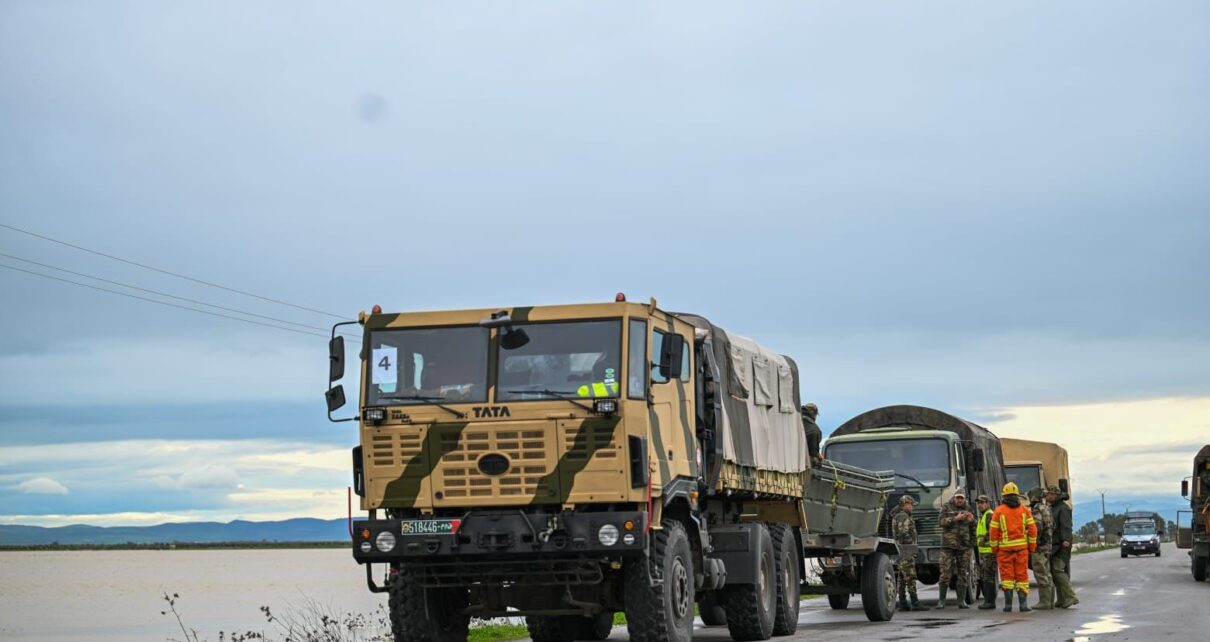
The Royal Armed Forces was deployed and helicopters and rescue boats were mobilized across the northwest.
Following instructions from King Mohammed VI, the government pledged 320 million dollars in funding to repair infrastructure, rebuild homes and support farmers and small businesses.
Tunisia and Algeria, meanwhile, faced their own flood emergencies, though with more limited pre-emptive measures.
Tunisia saw its worst rainfall since the 1950s in mid-January, flooding 15 governorates, affecting 25,000 people and prompting evacuations and the activation of the Tunisian Red Crescent.
In Algeria, authorities dragged feet as floods hit many northern towns. January storms still caused fatalities and forced widespread rescue operations across several provinces. Residents of Ghelizane were filmed protesting the absence of services after floods. Authorities responded with excessive force.
Across the Mediterranean, Spain and Portugal have been battered by successive storms which brought torrential rain, landslides, transport disruption and multiple deaths.
Observers have contrasted the two countries’ reactive posture, with Morocco’s more centralized and anticipatory mobilization, which moved tens of thousands out of danger before river overflows reached their peak.
While all five countries face mounting climate-driven extreme weather, Morocco’s combination of early evacuations, military coordination and rapid financial commitment has led many analysts to conclude that it has so far fared better in avoiding casualties and stabilizing affected regions, despite the scale of the disaster.