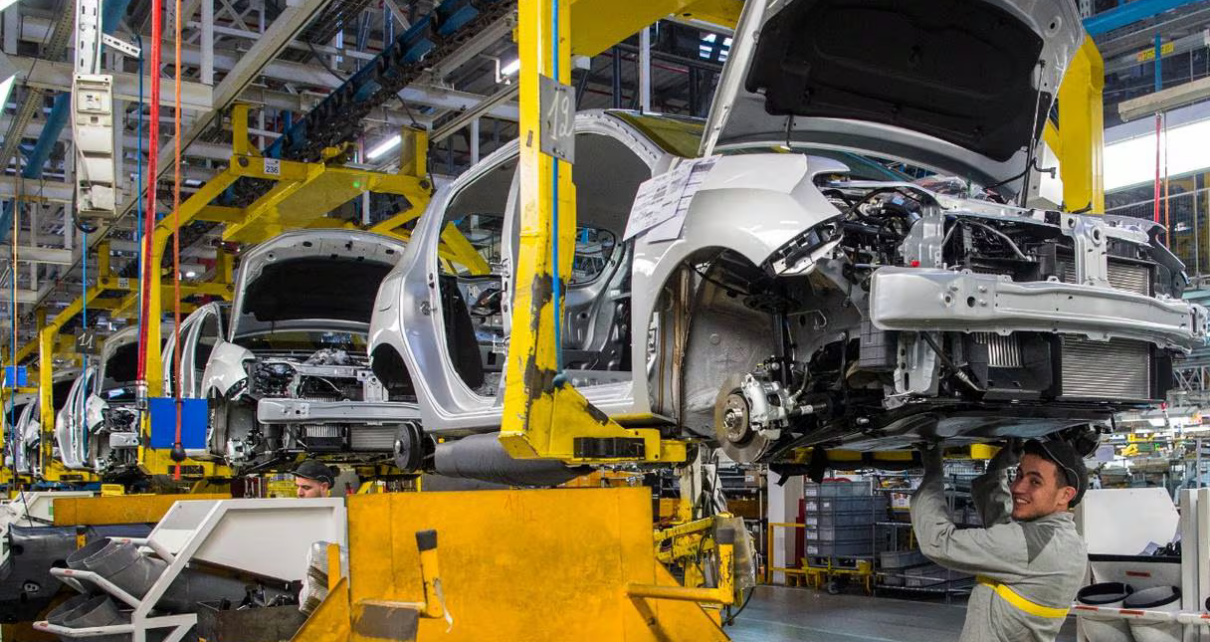
In a demanding international context, Renault Group Morocco confirms in 2025 its role as the leader of the national automotive sector and strengthens the Kingdom’s strategic position within the Group’s global footprint. Morocco now ranks as the Group’s second country in terms of production volume and the eighth global market in terms of sales volume, driven by the strong performance of the Dacia and Renault brands.
the data were revealed by Renault Group Morocco when presenting its annual results Tuesday in Casablanca. The goup revealed solid performance despite international tensions and a 5% decline compared to 2024. The group produced nearly 395,000 vehicles at its Tangier and Casablanca plants, with over 327,000 destined for export.
General Director Mohammed Bachiri noted that Renault achieved a 2.2% increase in international vehicle sales despite challenging global conditions. Domestically, Tangier Med and Casablanca facilities produced 394,465 vehicles in 2025, slightly below 2024’s record year but 3% higher than 2023. Tangier’s plant accounted for over 75% of production, with Morocco’s combined output representing approximately 17% of Renault’s global sales, meaning nearly one in six vehicles purchased worldwide originates from Moroccan factories.
Approximately 82% of production—about 327,552 vehicles—was exported to 63 destinations, primarily France, Spain, Italy, and Germany, though exports declined 11% compared to the previous year. Tangier exports 94% of its production, while Casablanca exports 47%.
Bachiri highlighted the Sandero model’s continued success as Europe’s best-selling car for the eighth consecutive year, manufactured exclusively in Morocco. The group maintained production pace despite challenges including COVID-19 and electronic component shortages.
Thibaut Paland, Commercial Director of Renault Commerce, reported that group brands accumulated 88,937 sales among 235,372 vehicles sold in Morocco’s market, representing a 37.38% market share, up 31% from 2024. Dacia dominates with over 20% of national sales and 55% of group sales, while Renault brand sales increased 44% with 41,050 vehicles sold.
The group completed 150,000 training hours across 60 IFMIA centers, training over 6,000 people. Looking toward 2030, Bachiri outlined five priorities: competitiveness, commercial leadership, new industrial projects, local ecosystem development, and skills hub creation. The group targets 75% integration and 3 billion euros in local sourcing by 2030.
Here is the English translation:
Since 2016, the Renault ecosystem has continued to take shape. The Group reports having reached local sourcing revenue of €2.39 billion in 2024**, with a local integration rate of 65.5% (excluding mechanical components). With an installed capacity of **more than 500,000 vehicles per year by the end of 2025, Renault now aims for 80% local integration by 2030, representing €3 billion in local sourcing.
Mobilize Financial Services also posted a record performance in 2025, with more than 29,000 financing contracts put into production and over 50,000 service contracts sold (insurance, maintenance, roadside assistance). The activity increased by +44% compared to 2024, with an intervention rate close to 33%.
For 2026, Mobilize aims to continue supporting the growth of the Renault and Dacia brands, accelerate its digital transformation, and develop long-term leasing through Mobilize Lease Co, created in 2025.