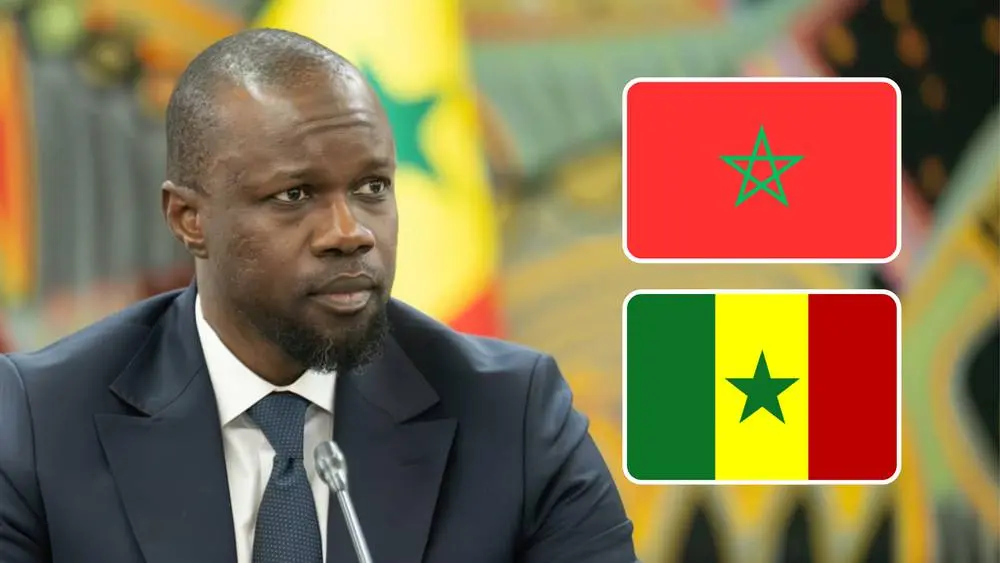
Senegal on Monday acknowledged that “deplorable” incidents marred the African Cup of Nations final against Morocco, while stressing that deep historical ties between the two countries remained intact, Prime Minister Ousmane Sonko said during an official visit to Rabat.
Speaking at the opening of a Moroccan‑Senegalese joint commission, Sonko said the visit came at a time marked by heightened sporting emotions and regrettable behaviour linked to the final, but underscored that the fallout should not be interpreted as a political or cultural rift between the two nations.
“The incidents observed here and there should neither be denied nor dramatized,” Sonko said, describing them as emotional excesses driven by passion rather than evidence of deeper divisions.
The African Cup final, which saw Senegal defeat hosts Morocco after extra time, was disrupted by protests by Senegal’s players who stormed off the pitch following a video‑assisted referee penalty decision, as well as clashes as Senegalese fans attempted to enter the pitch.
Sonko said sport, however passionate, was “too limited” to define relations between the two states, which he described as rooted in long‑standing human, spiritual, economic and cultural links that extend beyond political leadership.
“It tested the strength of two national passions in a shared space, but it did not divide our peoples,” he said.
The Senegalese prime minister said the visit was intended to reaffirm and strengthen bilateral ties, noting that the two countries had demonstrated their capacity to overcome emotional moments without allowing them to shape longer‑term relations.
Morocco and Senegal are close allies, with cooperation spanning trade, banking, infrastructure, energy, education and security.
Dakar backs Morocco’s sovereignty over Western Sahara, a disputed territory where Senegal operates a consulate.
Sonko said the joint commission, now in its 15th session, reflected a shared ambition to deepen what both sides describe as a strategic partnership, adding that more legal instruments would be signed to expand cooperation across multiple sectors.
He highlighted Senegal’s long‑term development strategy, known as Senegal 2050, and said Morocco was among the country’s key partners in achieving its economic and social transformation goals.