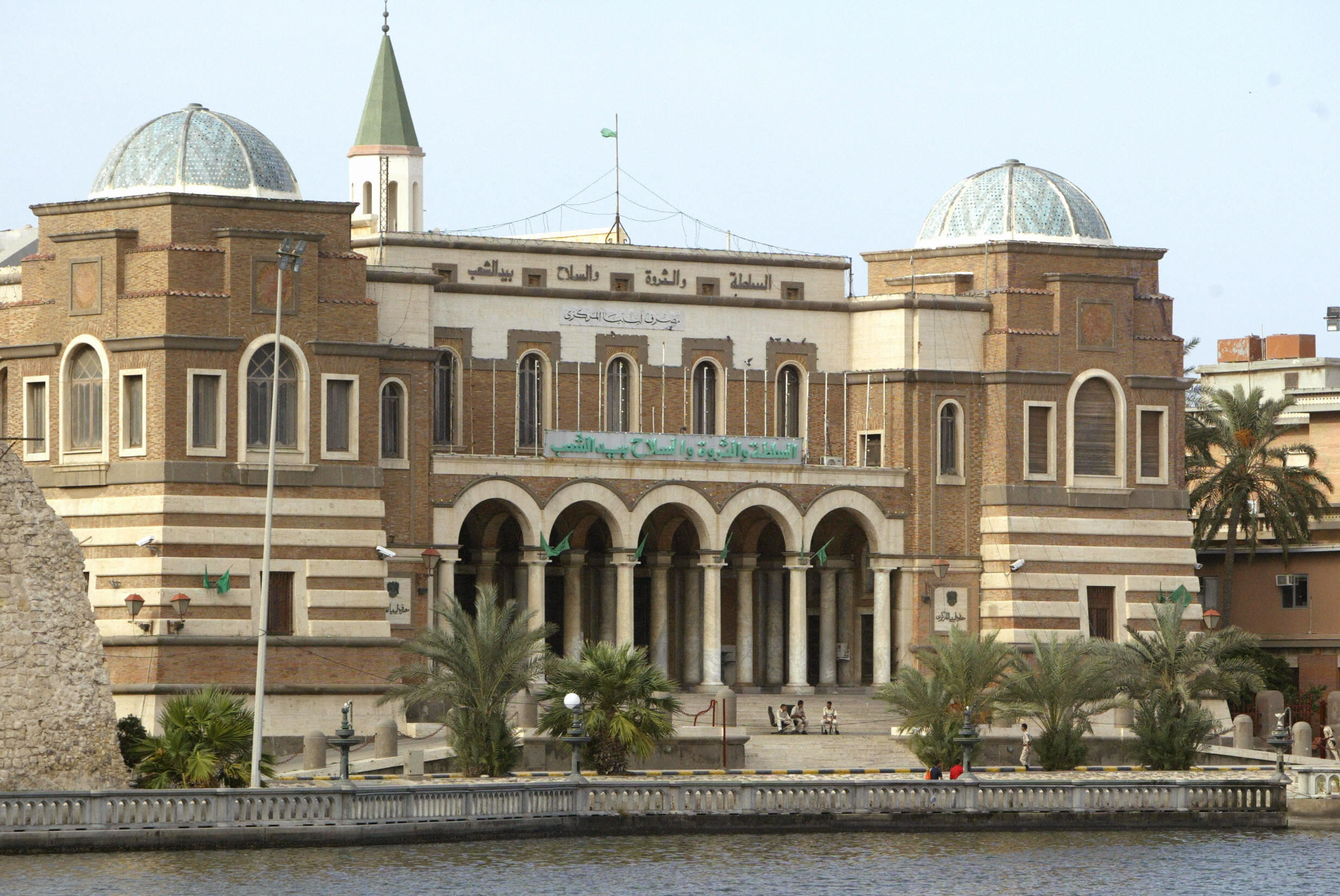
Libya’s central bank devalued the dinar by 14.7%, citing declining oil revenues and mounting economic pressures. The decision followed deliberations at the bank’s first board meeting of 2026, held last week, and was based on recommendations from the Monetary Policy Committee. Following the adjustment, the exchange rate was set at 0.1150 Special Drawing Rights (SDR) per dinar, down from 0.1348.
The central bank attributed the move to persistent political divisions, a global downturn in oil prices, the absence of a unified national budget, and rising public expenditure, stressing that the devaluation was necessary to safeguard financial stability. The SDR, an international reserve asset created by the International Monetary Fund (IMF), is valued against a basket of major currencies, including the US dollar, euro, Chinese yuan, Japanese yen and British pound.
Separately, Prime Minister Abdul Hamid Dbeibah announced a $2.7 billion project to expand the Misurata Free Zone Port Terminal, to be financed by foreign investors rather than the state budget. The project aims to increase the port’s capacity to around four million containers annually, positioning Libya as a regional logistics hub while modernizing infrastructure and generating long-term revenue from state assets. Misurata, located on Libya’s northwestern Mediterranean coast, remains one of the country’s principal commercial centers and a critical gateway for trade with Africa.