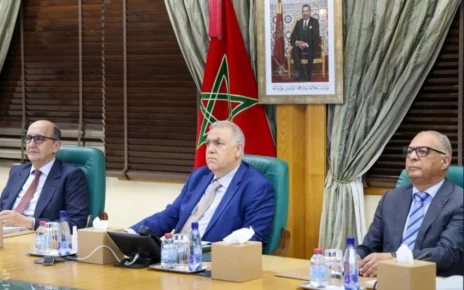
Morocco’s draft finance bill for 2026, presented to the Parliament by Economy and Finance Minister Nadia Fettah, outlines an ambitious roadmap to sustain growth while preserving fiscal stability.
The plan projects GDP growth at 4.6%, inflation contained at 2%, and a budget deficit reduced to 3% of GDP, alongside a public debt ratio of 66%.
The government expects cereals output to reach 70 million quintals, while maintaining energy price stability with butane capped at $500 per ton. These targets come amid global uncertainty, with eurozone growth forecast at just 1.1% in 2026.
The draft budget allocates a record 380 billion dirhams for public investment, prioritizing infrastructure and water security. Key projects include the high-speed rail extension to Marrakech, the Dakhla Atlantic port and Nador West Med upgrades and the modernization of airports and logistics networks.
The draft budget also earmarked 16.4 billion dirhams for water projects. These include 16 new dams, hydraulic interconnections, and desalination plants targeting 1.7 billion m³/year capacity.
Energy transition remains central, with renewables already at 45% of the electricity mix and plans to accelerate green hydrogen development and gas infrastructure.
The text earmarks 42.4 billion dirhams for health (+10 billion) and 97.1 billion dirhams for education, alongside 29 billion dirhams for social protection, including direct family support and expanded health coverage for vulnerable groups.
On the reform front, the government pledges to modernize fiscal governance, restructure state-owned enterprises, and enforce performance-based budgeting.
Morocco’s fiscal trajectory- deficit down from 5.5% in 2021 to 3.5% in 2025- recently earned the country an Investment Grade rating from Standard & Poor’s, reinforcing its appeal to global investors.