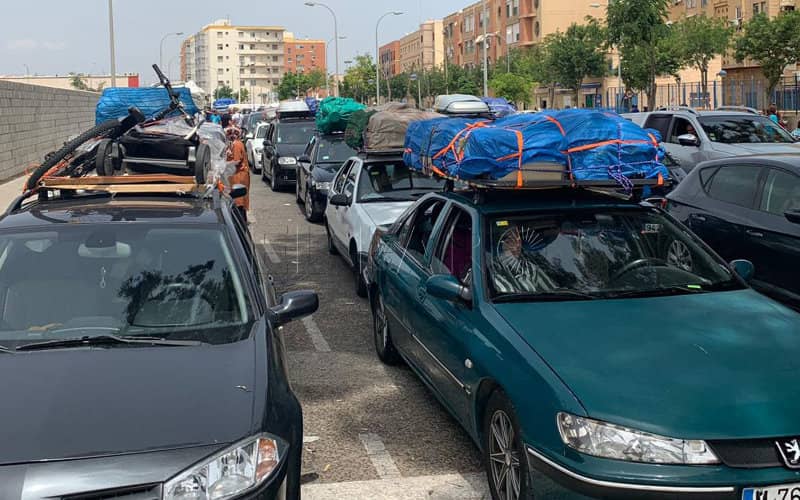
Morocco’s Transport Ministry has unveiled comprehensive measures to accommodate 7.5 million passengers and 2 million vehicles during the annual “Marhaba” operation, deploying 29 vessels across 13 maritime routes in coordination with multiple stakeholders.
Transport Minister Abdessamad Kayouh, addressing Parliament on Monday, detailed the extensive mobilization including ships with weekly capacity for 500,000 passengers and 130,000 vehicles, totaling approximately 7,800 crossings throughout the summer season.
Aviation preparations include authorizations for 59 airlines operating 2,135 weekly flights connecting Moroccan airports with 141 international destinations. Moroccan carrier Royal Air Maroc has bolstered its fleet with four additional aircraft for the summer period, offering 6.6 million seats—an increase of 700,000 seats compared to 2024, demonstrating its commitment to facilitating the return of Moroccan expatriates for summer holidays at home.
The minister highlighted Morocco’s strategic “Open Sky” policy adopted in 2006, which has successfully attracted over 50 airlines, including numerous low-cost carriers, now operating from the Kingdom primarily to European destinations. This liberalization has significantly enhanced connectivity and competitive pricing for travelers.
The “Marhaba” operation represents one of the world’s largest seasonal migration movements, as millions of Moroccan expatriates return home for summer holidays. The coordinated effort involves multiple government agencies, port authorities, and transport operators working to ensure smooth passage through key transit points.
This year’s expanded capacity reflects growing demand and Morocco’s commitment to maintaining strong ties with its diaspora community, estimated at over 5 million people worldwide. The operation’s success is crucial for family reunions, tourism revenue, and maintaining cultural connections between Morocco and its expatriate population.