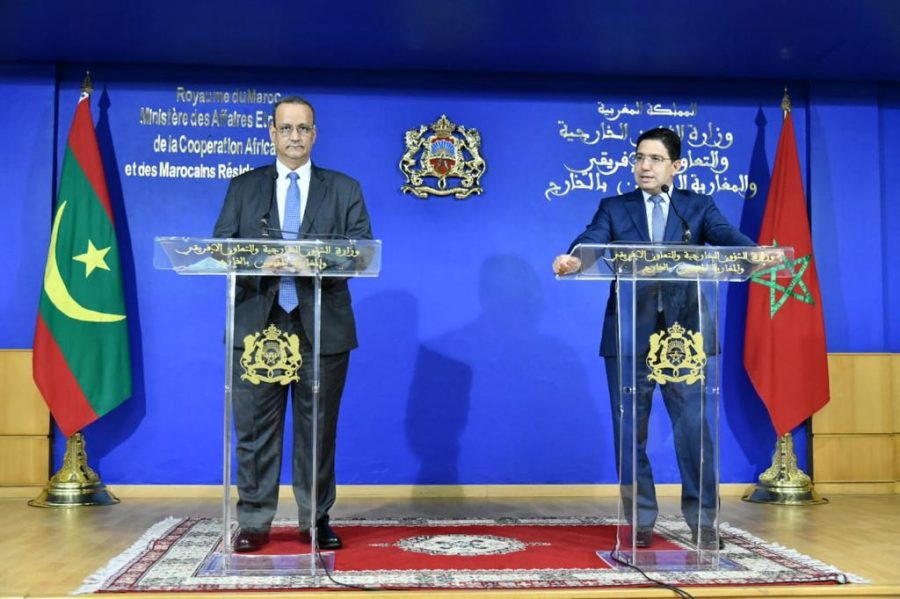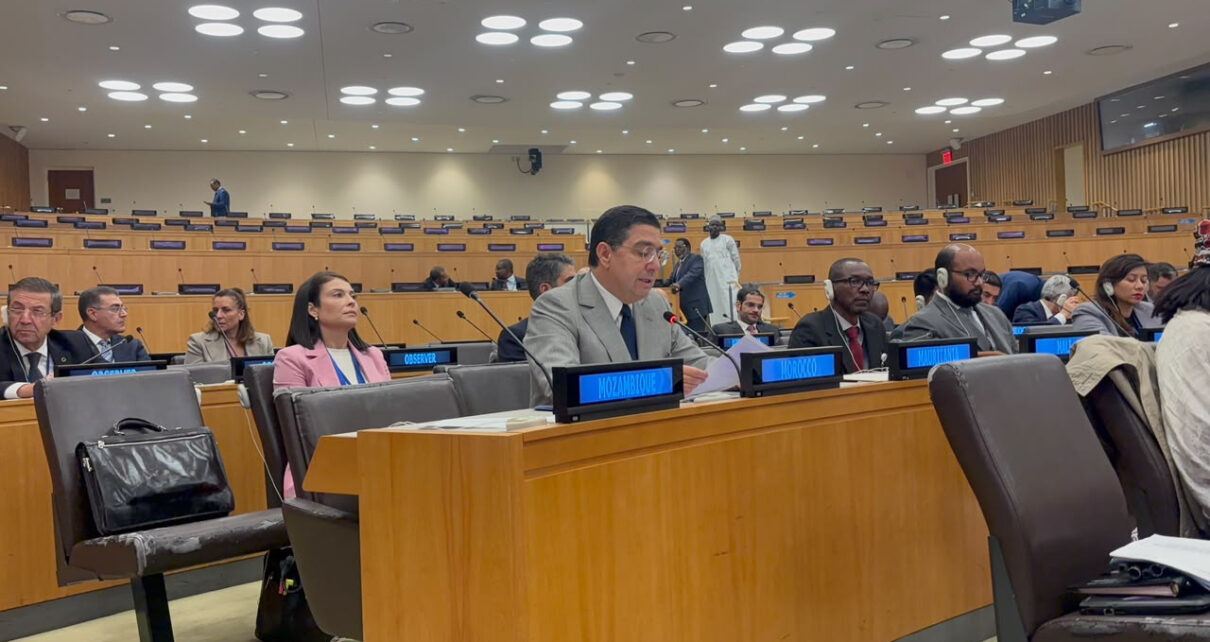
Morocco, under the leadership of King Mohammed VI, Chairman of the Al-Quds Committee, has reaffirmed commitment to continue endeavoring for achieving a solution that safeguards the historical and legitimate rights of the Palestinian people.
The commitment was reaffirmed by Minister of Foreign Affairs, Nasser Bourita, in an address Thursday during the annual coordination meeting of the Foreign ministers of the Member States of the Organisation of Islamic Cooperation (OIC), held on the sidelines of the 81st session of the United Nations General Assembly.
Bourita said that, “in light of the worrying and dangerous developments,” Morocco, under the leadership of the King, and based on its conviction that peace is a strategic choice, will continue to work until a solution is reached that safeguards the historical and legitimate rights of the Palestinian people, leading to the establishment of an independent Palestinian state within the 1967 borders, with East Al-Quds as its capital.
The minister, who is leading the Moroccan delegation to the 81st session of the UN General Assembly, considered this to be the appropriate means of countering hate speech and extremism, while fostering the emergence of a Middle East where the peoples of the region enjoy peace, security and stability.
He noted that the Palestinian cause, the foremost and central issue of the Islamic Ummah, is going through a pivotal historical phase, marked by systematic and ongoing Israeli attacks “against our Palestinian brothers in the Gaza Strip, the expansion of settlements in the West Bank and the escalation of violence perpetrated by settlers, as well as the policies of Judaization pursued in the city of Al-Quds.”
In response to this situation, Bourita stressed that the Kingdom, under the impetus of the Sovereign, continues to pursue an approach combining measured political action and diplomatic efforts, with the aim of safeguarding the legitimate rights of the Palestinians, with concrete action on the ground.
He added that this action is being implemented through field projects overseen by Bayt Mal Al-Quds Al-Sharif Agency, the executive arm of the Al Quds committee supporting the people of the Holy City and backing their resilience in the face of “systematic Judaization policies” aimed at changing the legal, historical and demographic status of the City.
In this regard, Bourita stressed that Morocco, which believes in the importance of collective multilateral action, “has genuinely engaged in international initiatives aimed at promoting peace and stability in the region.”
He stated further that Morocco’s participation in the Peace Council reflects a clear determination to contribute positively and constructively to de-escalation, the protection of civilians, and the creation of appropriate conditions for the resumption of a serious and credible political process.