Moroccan Foreign Minister Nasser Bourita outlined the core principles promoted under Morocco’s 2026 presidency of the United Nations Peacebuilding Commission (PBC), emphasizing national ownership, inclusive institutions, and stronger partnerships aligned with states’ priorities.
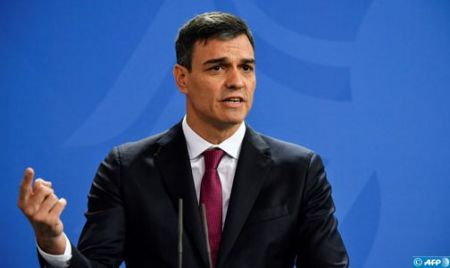
Speaking at a high-level PBC meeting on “National ownership in practice: Strengthening inclusive state institutions,” Bourita addressed an audience that included UN Deputy Secretary-General Amina J. Mohammed, Papua New Guinea Prime Minister James Marape, Kenya’s First Cabinet Secretary Musalia Mudavadi, African Development Bank Vice-President Marie-Laure Akin-Olugbade, and other senior officials.Twenty years after the PBC’s creation, Bourita noted that the body stands at a pivotal moment, informed by the Pact for the Future and the 2025 review of the Peacebuilding Architecture.
Lasting peace, he stressed, cannot be built in place of the states and societies concerned.
Morocco has therefore called for national ownership to become a concrete principle grounded in sovereignty, shared responsibility, and the strengthening of national capacities, whether political, institutional or financial, through legitimate and inclusive institutions responsive to populations’ needs.
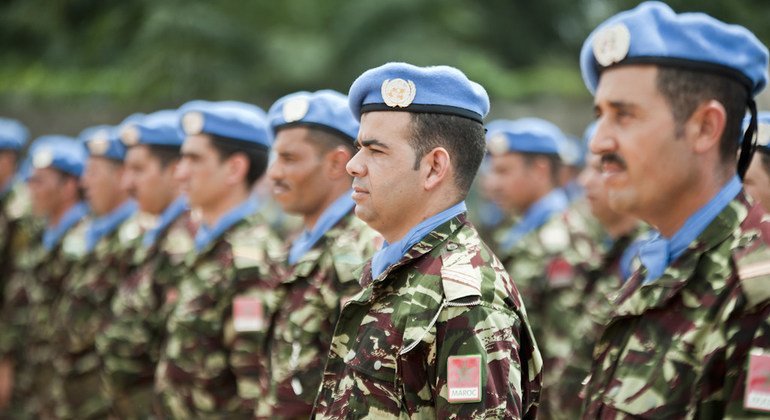
This approach forms part of Morocco’s broader “Peace-Security-Development-Governance” nexus and reflects the Kingdom’s longstanding commitment to conflict prevention, mediation, peacekeeping, peacebuilding, and post-conflict reconstruction.
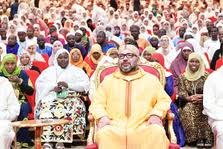
Bourita recalled King Mohammed VI’s message to the African Union Extraordinary Summit in Luanda, in which the Sovereign affirmed that “Morocco makes peace, security and stability in Africa a strategic choice and a constant commitment.”
This vision guides Morocco’s work as chair of the Central African Republic country-specific configuration of the PBC since 2014, supporting the priorities of Central African authorities.
Among concrete proposals, Bourita advocated institutionalizing outreach beyond New York through sessions held in the countries concerned, and the development of a National Ownership Diagnostic to jointly identify the capacities required for durable peacebuilding.
He also called for greater predictability of funding and stronger partnerships with international financial institutions and development banks to better link peace, investment, and development around national priorities.
The added value of the Peacebuilding Commission, he underlined, lies in its ability to build bridges between peace and development, between states and the multilateral system, and between national priorities and international resources.
Bourita also stated that the ambition must be not only to do more peacebuilding, but to do it better.
As PBC President, he reaffirmed Morocco’s commitment to implementing the 2025 review and strengthening the Commission in the service of peace that is genuinely national, inclusive, and sustainable.
The Peacebuilding Commission was established in 2005 by the Security Council and the General Assembly as an intergovernmental advisory body to support countries emerging from conflict, propose integrated strategies for peacebuilding and post-conflict recovery, bring together relevant actors, and mobilize resources.