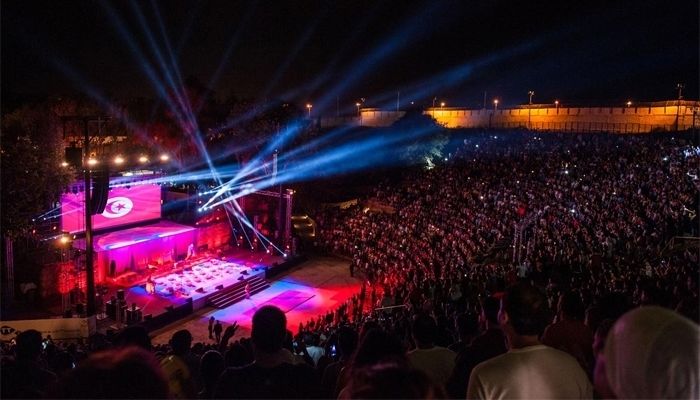
Tunisia’s summer festival season is under threat after organizers said they could no longer obtain the foreign currency needed to pay international performers, raising the prospect of last-minute cancellations and contractual disputes.
Lawyer Ahmed Ben Hassana told Tunisian outlet Webdo.tn that the commission overseeing foreign artists and the Ministry of Cultural Affairs were taken by surprise after requests for foreign-exchange transfers were reportedly rejected because the annual quota allocated for cultural events had been exhausted.
According to Ben Hassana, the foreign-currency allocation used to pay overseas artists has remained unchanged since 2005 despite inflation, rising performance fees and the depreciation of the Tunisian dinar, leaving the quota increasingly inadequate for the sector’s needs.
Many festival organizers had already signed contracts with foreign artists, paid advances, booked flights and accommodation and completed administrative procedures before learning they would be unable to complete payments, he said. The situation could leave organizers exposed to financial losses and legal claims.
While major state-backed events such as the Carthage and Hammamet festivals appear less affected, smaller festivals run by associations are expected to bear the brunt of the restrictions.
The dispute highlights broader pressures on Tunisia’s economy as authorities struggle with limited access to external financing.
A $1.9 billion International Monetary Fund programme agreed at staff level in 2022 has remained stalled after President Kais Saied rejected key reform conditions, such as subsidies cuts.
Since then, the government has increasingly relied on domestic borrowing and exceptional financing from the central bank to cover budget needs amid scarce external funding.
Economists have warned that heavy government borrowing risks draining liquidity from the banking sector and crowding out lending to businesses and households, as banks devote a growing share of resources to financing the state.