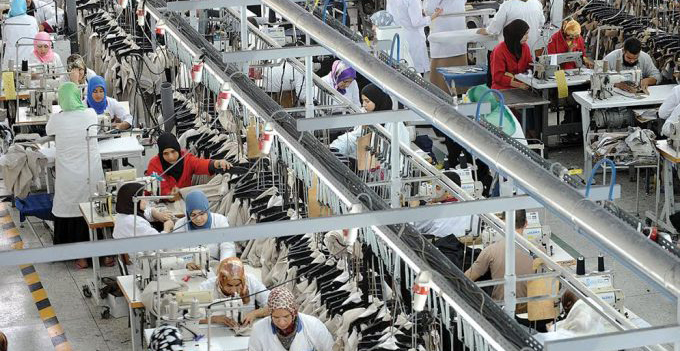
Morocco’s textile and leather exports fell 9.1% by end-May 2026, according to data from the Office des Changes, with ready-made garments down 8.2% and knitwear declining 11.8%. The sector has failed to recover since a first quarter was already marked by falling exports, but analysts say that weather and logistics disruptions no longer account for the sustained deterioration now visible in April and May figures.
Industrial strategy consultant Redouane Lachgar told Médias24 that the primary underlying cause is a growing labor shortage in the garment manufacturing segment, estimated at around 16,000 unfilled machine operator posts. The shortfall directly reduces output, lengthens delivery times, and undermines companies’ ability to fulfil orders — a mechanical constraint in a sector that remains largely labor-intensive. Lachgar noted with concern that consecutive years of significant export decline are beginning to be treated as the new normal in the sector, when they should be prompting urgent action.
The economic cost of the deficit is substantial. Based on 16,000 unfilled posts, a 191-hour monthly reference, an average production rate of three garments per hour, and a unit value of 50 dirhams, Lachgar estimates the potential production shortfall at roughly 46 million garments over five months, representing an annualized loss of approximately 5.5 billion dirhams in unrealized production if the deficit persists.
The root cause, he explained, is the widening gap between the cost of living in Morocco’s main garment-producing cities — particularly Tangier and Casablanca — and the wages the industry can offer. With monthly salaries capped at around 3,600 dirhams, workers relocating from other regions often find that rent, transport, and daily costs absorb their entire income, eliminating the financial incentive to move to major urban centres for factory work.
The structural bind is that employers, squeezed by the pricing demands of international buyers, cannot simply raise wages without eroding their price competitiveness. Yet if wages no longer cover the cost of urban living, workers leave or refuse to enter the sector. This threatens to undermine Morocco’s core nearshoring appeal — its ability to deliver quickly and flexibly to European clients — since a manufacturer short of operators at a peak demand moment cannot absorb the full order, and the client moves on to a faster competitor.