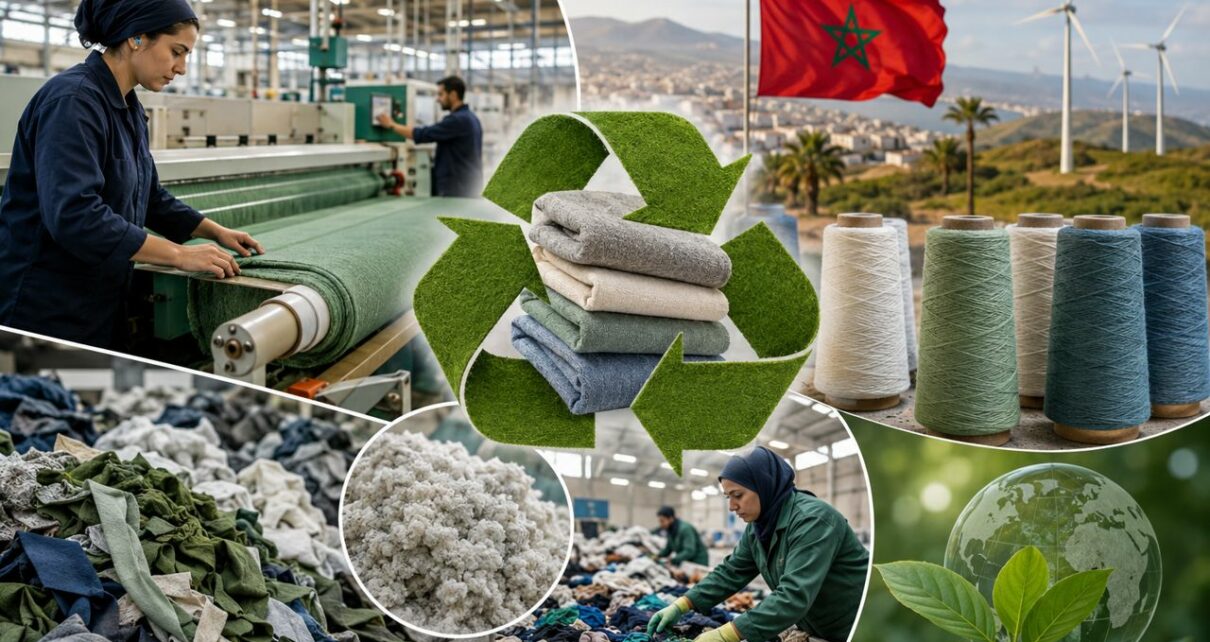
Recycling textile waste in Morocco is technically viable and commercially feasible and could attract $1.9 billion in additional private investment and generate more than 30,000 jobs, according to a study carried out by World Bank’s IFC pilot project.
Trials conducted as part of the “Morocco Textile Circularity program” yielded positive results exceeding all expectations as 427 metric tons of textile offcuts were turned into new materials for manufacturing, with a further 2,400 tons committed for recycling.
Furthermore, the recycled-content fabric met standard commercial quality benchmarks across all tested parameters and can re-enter the supply chain without compromising performance and quality. A life-cycle analysis also found that using recycled materials can reduce carbon emissions by around 18 percent and water use by over 60 percent compared to conventional production.
A significant share of the economic opportunity would benefit workers at the base of the value chain. Morocco’s textile waste collectors currently operate more than 80 percent informally. Research conducted as part of the program found that up to 75 percent of collectors could transition to formal status within five years given the right institutional support, creating a more stable foundation for the circular economy and new economic security for some of Morocco’s most vulnerable workers.
“Scaling textile circularity in Morocco will create tens of thousands of jobs and build a globally competitive industry,” said David Tinel, IFC’s Regional Manager for the Maghreb. “The proof is in place. Scaling now establishes Morocco at the forefront of sustainable manufacturing for global markets.”
According to the IFC, capturing the full opportunity of this project requires targeted policy action. This includes reclassifying factory offcuts as industrial by-products rather than waste; reforming customs rules and investing in domestic spinning capacity.
Textile circularity is a timely matter as global buyers – particularly in the European Union, which absorbs 93 percent of Morocco’s textile exports – are tightening requirements on sustainability, traceability, and recycled content.