Fitch Solutions has revised downward its forecast for global construction sector growth to 2.3 percent in 2026, from an earlier projection of 2.7 percent, citing the disruptions to energy and logistics chains generated by the ongoing tensions around the Strait of Hormuz and the broader geopolitical turbulence stemming from the Gulf conflict. The revision marks the first significant downward adjustment to global construction expectations in the current cycle and carries specific implications for Morocco, even though the country is not cited explicitly in the Fitch analysis.
The direct transmission channels are already visible in commodity prices. Aluminum reached $3,621.50 per ton at the London Metal Exchange in mid-April — a four-year high — driven by energy price pressure and supply chain disruption. Maritime freight costs have also risen, alongside fuel and industrial equipment costs. For Morocco’s construction sector, which remains heavily dependent on imported steel, aluminum, and technical components, these movements compress margins even when demand conditions remain favorable.
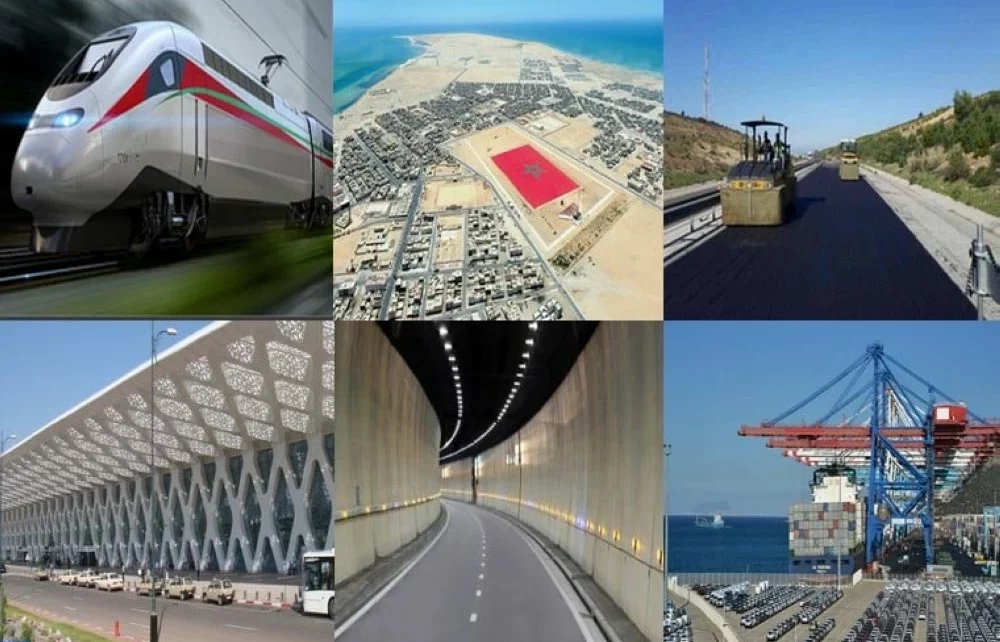
Morocco’s construction market is nonetheless projected to outperform its regional peers, with the High Commission for Planning forecasting BTP sector growth of 3.9 percent in 2026. The country benefits from an exceptional project pipeline: the 2026 Finance Law allocates close to 380 billion dirhams in public investment, an historically high level, with programs spanning railways, ports, hydraulic infrastructure, and urban equipment. The 2030 World Cup preparation continues to generate sustained demand across sporting facilities, hospitality, urban transport, and territorial infrastructure.
The contrast with the broader MENA region is notable. Fitch Solutions projects regional construction growth slowing sharply to 1.7 percent in 2026, against 4.2 percent in 2025, as energy price pressure and geopolitical disruption weigh on Gulf economies’ project pipelines. Morocco’s more domestically driven investment program — less dependent on energy revenues and more structurally anchored in the 2030 World Cup mandate — provides relative insulation from this deceleration.
The principal vulnerability for Morocco lies in energy costs. Morocco imports close to 90 percent of its hydrocarbon needs, and data from the Office des Changes show that the national energy import bill exceeded 114 billion dirhams in 2025. Any sustained elevation of crude oil prices filters directly into construction through higher fuel costs for equipment and transport, rising manufacturing costs for cement and steel, and increased logistics expenses for large project sites. Fitch notes that the most durable effects of the current conflict may stem not from direct military operations but from persistent supply chain imbalances — a dynamic that directly affects the cost structure of Morocco’s infrastructure program.