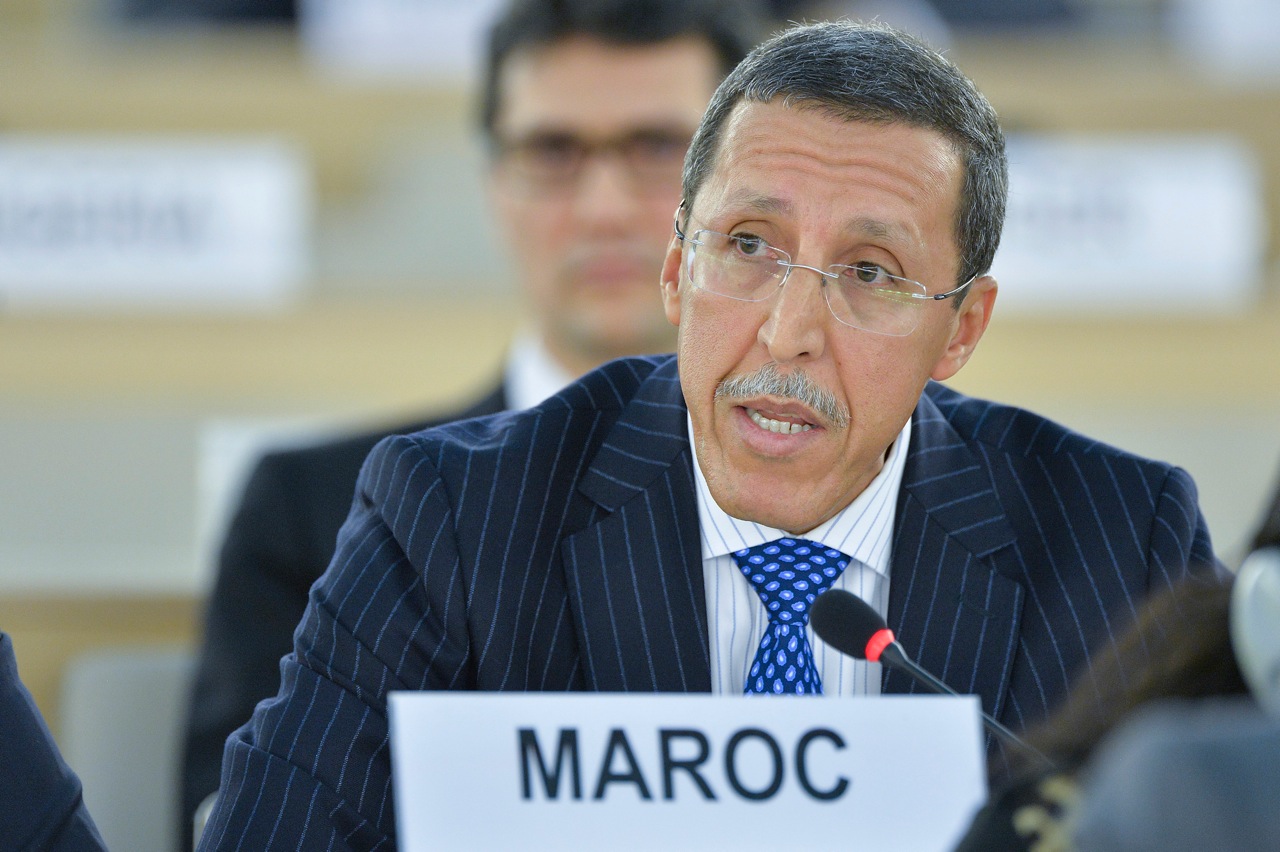
Morocco’s Permanent Representative to the United Nations, Omar Hilale, used a series of high-profile interventions this week to advance the case for South-South cooperation as an indispensable and structurally undervalued dimension of global multilateralism — not merely as a complement to North-South development flows, but as a sovereign alternative model capable of addressing the global South’s most pressing challenges on its own terms. His argument, consistent across platforms and audiences, draws directly on Morocco’s experience under King Mohammed VI’s vision of Africa-centered partnership.
Hilale chairs two overlapping UN mandates that give his voice particular institutional authority on this question: the Presidency of the Peacebuilding Commission for 2026, and the Presidency of the High-Level Committee of the UN General Assembly on South-South Cooperation, to which he was elected by acclamation in April 2025. The convergence of these roles is not accidental. Hilale has consistently argued that the distinction between peace architecture and development cooperation is artificial: sustainable peace requires development, and sustainable development requires peace. South-South cooperation, in his framing, is the mechanism most capable of delivering both simultaneously in fragile and post-conflict settings.
His recent interventions emphasize two themes that have become central to the Moroccan presidency’s intellectual contribution. The first is the concept of constancy: South-South cooperation, Hilale argues, must not be treated as a residual or episodic arrangement that fills gaps left by North-South mechanisms. It must be a permanent, institutionalized pillar of the international development architecture, with predictable financing, shared monitoring frameworks, and formal recognition within the UN system’s coordination structures. The second theme is the Global South’s technological emergence, particularly in the field of artificial intelligence.
At the official launch of the ‘AI Made in Morocco’ project in Rabat, Hilale argued that artificial intelligence represents a defining new frontier for South-South cooperation, and that Morocco’s model — sovereign cloud infrastructure, an ethical and inclusive AI framework, and a deliberate strategy of positioning AI as a tool of collective development rather than geopolitical competition — offers a replicable template for African and Southern nations seeking technological autonomy. He described Morocco as simultaneously chairing the UN Friends of AI Group on Sustainable Development and the African Coalition for Science and Innovation, making it one of the few developing countries with a genuinely multilateral technological diplomacy.
Taken together, Hilale’s diplomatic activity in May 2026 reflects Morocco’s sustained effort to convert its position within the UN system from that of a credible and active contributor to that of an intellectual and institutional leader. His ability to move fluidly between the Peacebuilding Commission, the South-South Cooperation Committee, the Security Council, and national diplomatic initiatives like AI Made in Morocco is itself a demonstration of the breadth and coherence of a foreign policy architecture that has been built over two decades.