As the African space economy accelerates toward an estimated $22.64 billion in 2026 — up from $19.49 billion in 2021 — Morocco is consolidating its position within the continent’s top tier of space-capable nations. Alongside Egypt, Nigeria and South Africa, the Kingdom is classified in Africa’s first circle of space powers by multiple international assessments including those of Space in Africa and the Africa Center for Strategic Studies, distinguished by the quality of its satellite payloads and their dual civil-security applications.
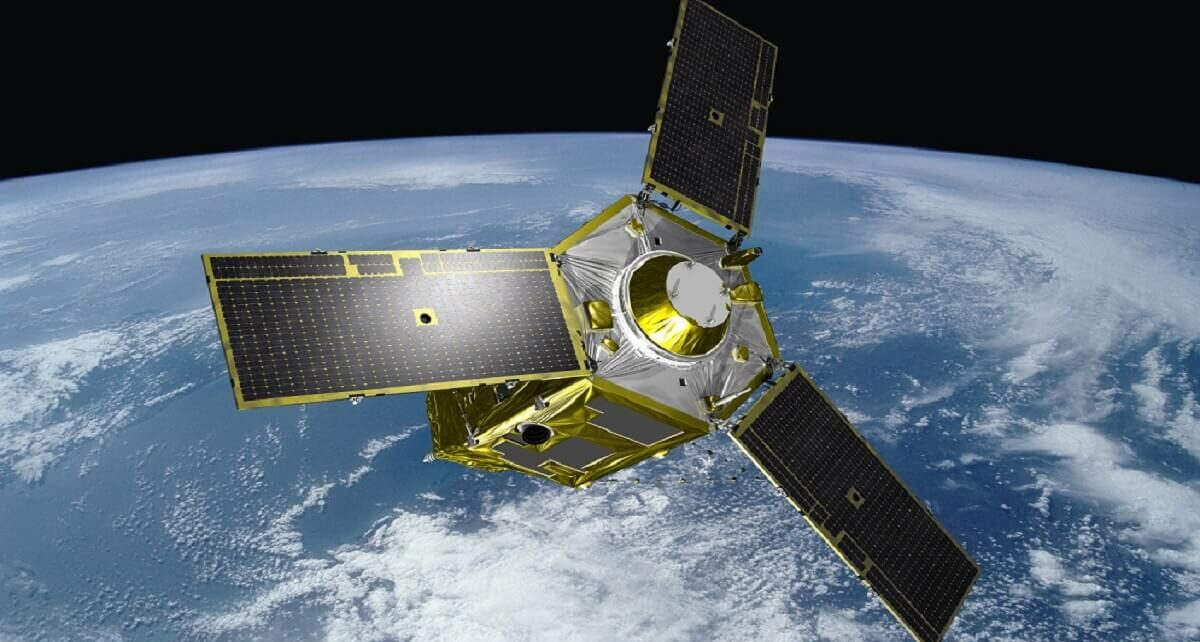
Morocco’s space program rests on two operational pillars. The Mohammed VI-A and Mohammed VI-B Earth observation satellites, launched from Kourou in November 2017 and November 2018 respectively aboard Arianespace’s Vega rocket in partnership with Thales Alenia Space and Airbus Defense and Space, provide the Kingdom with sovereign, high-resolution imaging capability covering the entire globe within 24 hours. The Royal Centre for Remote Sensing (CRTS), which functions as the de facto national space agency, manages these assets through a national ground infrastructure, trained engineers, and cooperative agreements with European and Arab partners.
Morocco’s multilateral recognition in the space domain received a significant boost in October 2025, when a United Nations resolution on space expressly cited the CRTS-hosted UN-affiliated francophone African regional space sciences training center in paragraph 31 of its text — the first such explicit acknowledgement in a numbered UN document. This diplomatic dimension complements Morocco’s technical credentials and supports its broader argument that it can serve as a responsible model for emerging African space nations.
The Kingdom is actively preparing the next generation of its space capability. Reports from 2024 indicated that Morocco was in advanced discussions to acquire new-generation observation satellites, with Israeli firm Israel Aerospace Industries and French partners both under consideration — a diversification that signals Rabat’s intent to maintain and upgrade its orbital assets as the Mohammed VI A and B approach the end of their operational lifespans. Morocco has also hosted the Africa and Middle East Space Conference (AMESC) in Rabat in February 2025, positioning itself as a convening hub for the continent’s space governance conversation.
The broader African space ecosystem is undergoing rapid transformation. The African Space Agency (AfSA), inaugurated in Cairo in April 2025, has set a target of coordinating 120 satellites in orbit by 2030, with 15 African countries having collectively invested over $4.71 billion in satellite development. Against this backdrop, Morocco’s combination of operational satellites, accredited training infrastructure, UN recognition and active next-generation procurement places it firmly in the role the H24info article describes: a figurehead for African space ambitions, and a credible demonstration that sovereignty in space is achievable from the continent.