Morocco has just emerged from one of its most rainfall-intensive winters since records began in 1981, according to the country’s General Directorate of Meteorology (DGM). After seven consecutive years of drought, the 2025-2026 winter season delivered a dramatic and long-awaited reversal of the Kingdom’s hydrological fortunes.
The DGM attributed the exceptional conditions to a weakening of the polar vortex, which allowed cold Arctic air to push southward toward Morocco, repositioning the jet stream over the country while nudging the Azores high-pressure system further south. This atmospheric configuration enabled powerful moisture-laden air currents — known as atmospheric rivers — to repeatedly cross Moroccan territory, unleashing sustained and heavy precipitation.
National average rainfall reached 136 mm over the season, nearly double the standard winter benchmark of 71 mm recorded between 1991 and 2020. The winter ranked third wettest since 1981, behind 2010 (200 mm) and 1996 (178 mm). Notably, the season produced an average of 36 rainy days nationwide, more than twice the historical norm of 17.
Several cities broke longstanding records. Ifrane logged 49 rainy days — surpassing its 1963 record of 44 — while Kénitra reached 43 days, eclipsing its 1996 mark. Casablanca recorded 38 rainy days, edging past its 1997 record by one day. In absolute rainfall terms, Tanger registered a staggering 1,296 mm for the season, shattering its previous record of 889 mm set in 1996.
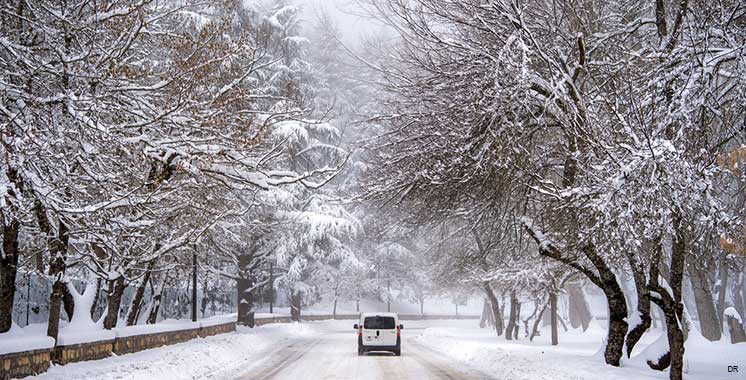
Snow cover also reached exceptional levels. On December 18, 2025, the snow-covered area peaked at 55,495 km² — the highest extent recorded since 2019. A second significant peak of 50,127 km² was observed on January 25, with coverage remaining above 20,000 km² for most of the season.
The meteorological turnaround carries significant implications for agriculture, water reservoir levels, and Morocco’s long-term water security strategy.