A true pillar of Morocco’s national football ecosystem, the Mohammed VI Football Academy has established itself as a structured and sustainable talent pool, consistently supplying Moroccan clubs and the national team, while an increasing number of its graduates are making their mark at Europe’s top clubs, the BBC writes on its website, on the eve of the launch of the AFCON 2025 Morocco.
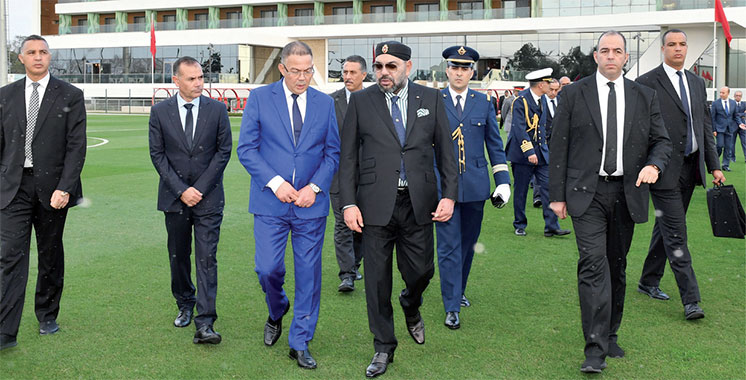
Located in Salé, on the outskirts of Rabat, the Mohammed VI Academy features world-class training pitches, dormitories, study halls and medical centers, said the BBC, which notes that Morocco has invested heavily, particularly in football infrastructure, developing the most advanced facilities in Africa. These facilities will host, starting Sunday, the final stages of the Africa Cup of Nations (AFCON 2025).
The Mohammed VI Academy and the Mohammed VI Training Complex host youth and senior national teams, both men’s and women’s, combining elite-level training, education, accommodation and sports science, the BBC continues.
The broadcaster underscores that the level reached by Moroccan football is the result of years of strategic planning and a long-term national project backed by the highest authorities in the Kingdom.
The rise of Moroccan football is therefore no accident, the BBC notes, while also assessing the Atlas Lions’ chances of winning this year’s AFCON.
When the Africa Cup of Nations kicks off on Sunday, host nation Morocco hopes the tournament will mark the culmination of an ambitious long-term project aimed at making the Kingdom the continent’s leading football power, the British broadcaster estimates.
Morocco has not won the African title since 1976 in Ethiopia, the BBC recalls, highlighting a long wait that stands in stark contrast to the national team’s recent successes on the international stage.
“It is difficult to explain. It is something you feel deep in your heart,” midfielder Sofyan Amrabat told the BBC. “I’m really looking forward to this AFCON, especially because it’s being played at home. And of course, we hope it will be ours,” added the 29-year-old, expressing his pride in representing his country. “Every time I wear the Moroccan jersey, it’s an incredible feeling.”
The former Manchester United player was one of the key figures in Morocco’s historic run at the last FIFA World Cup in Qatar, where the Atlas Lions became the first African nation to reach the semifinals of the tournament, the media outlet recalles.
Showing the same interest in Morocco’s rising football, British daily The Times highlighted the pivotal role played by the prestigious Mohammed VI Football Academy, describing it as a powerful embodiment of the profound transformation of Moroccan football.
Through world-class infrastructure, rigorous training standards, and a clear long-term vision, Morocco has positioned itself as a benchmark in talent development, showcasing a modern, structured, and ambitious football culture, the newspaper writes.
The current Moroccan national team, coached by Walid Regragui, includes several players who are direct products of the Mohammed VI Academy, The Times notes, citing Nayef Aguerd, former West Ham United defender, alongside Azzedine Ounahi and Youssef En-Nesyri.
These players formed the backbone of the squad that finished fourth at the 2022 FIFA World Cup in Qatar, the paper observes, underscoring this achievement as a clear illustration of the academy’s impact, an institution that continues to produce some of Morocco’s finest footballing talents.
The academy was also strongly represented in the Moroccan team that won the Under-20 World Cup last October, another national first and further confirmation that Morocco boasts a deep pool of outstanding young players around whom the future is being built, the newspaper adds.
Taken together, these factors reinforce Morocco’s status as the leading favorite to win the 2025 Africa Cup of Nations (AFCON), which kicks off on Sunday in the Kingdom, the publication underlines.
The Times also revisits the Atlas Lions’ prospects of lifting this year’s AFCON trophy, highlighting the meteoric rise of Regragui’s protégés, who have recorded 15 consecutive victories, a world record.
Moroccan players, most of whom compete at top European clubs, will not begrudge leaving their teams mid-season to showcase their talent in an environment that rivals those of the world’s most advanced footballing nations.
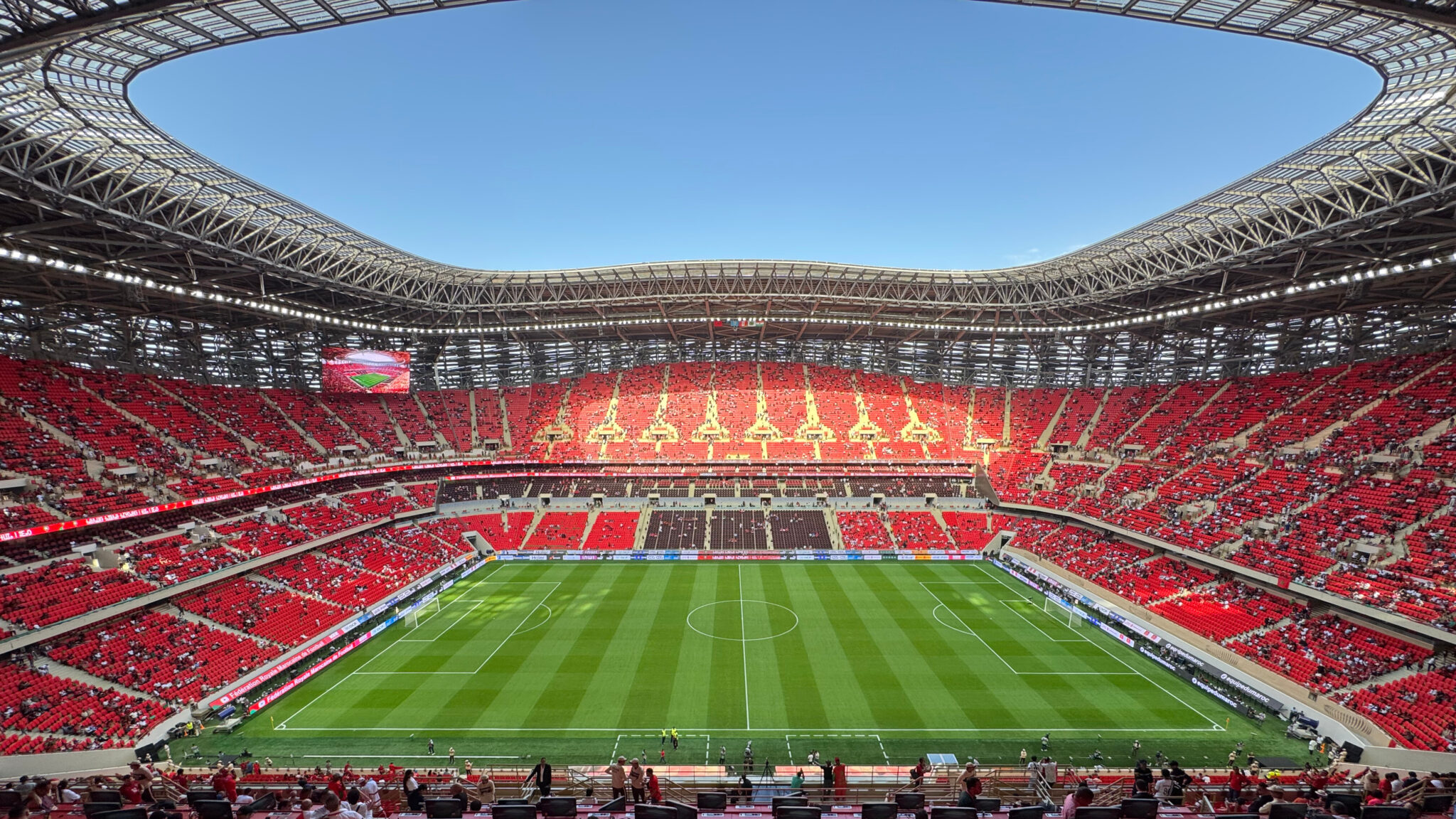
AFCON 2025 will be staged in state-of-the-art stadiums, the newspaper notes, pointing out that over the next five weeks, impressive venues such as Rabat’s Moulay Abdellah Stadium and the Grand Stade de Tangier will serve as a showcase ahead of the final stages of the 2030 FIFA World Cup, which Morocco will co-host with Spain and Portugal.
The Hassan II Stadium in Casablanca, currently under construction and set to accommodate 115,000 spectators, will further enhance these high-quality facilities, the paper adds, stressing that Morocco is asserting itself as a nation determined to assume leadership in football not only in Africa but also on the global stage.
“It’s phenomenal to see how much all of this has developed in such a short time,” The Times quoted the national team coach as saying. “Today, what we have built means we envy no country in the world,” Regragui said.
Morocco is now regarded as an African heavyweight when football is measured in terms of resources and World Cup appearances, the newspaper concludes, noting that the Atlas Lions finally have a real opportunity to end a long drought and win an AFCON title that has eluded them since 1976.
For ESPN Brasil, AFCON is a peek into Morocco for 2030, as the Brazilian sports outlet focuses on the scale of investments made to modernize infrastructure and look ahead to the 2030 World Cup.
ESPN Brasil paints a picture of a Morocco in which the continental tournament is part of a broader trajectory, serving to test its organizational capabilities as it prepares to co-host the 2030 World Cup alongside Spain and Portugal.
“The host country of the Africa Cup has spared no effort in modernizing its stadiums and top-tier facilities,” ESPN Brasil writes, stressing that these projects are part of a wider infrastructure program designed with the 2030 horizon in mind.
The Brazilian outlet particularly highlights the network of stadiums set to host major international competitions, citing venues in Rabat, Tangier, Fez, Agadir and Marrakech. It notes that some already meet FIFA standards, while others will undergo upgrades after the AFCON.
The article also emphasizes the strategic nature of the projects under way, referring to the ongoing construction of the Grand Hassan II Stadium in Benslimane, designed to become the “largest stadium in the world,” with a capacity of 115,000 spectators. The facility is presented as “an additional asset” in the race to host the World Cup final.
“This is Morocco’s main argument in its bid to host the final of the 2030 World Cup at the expense of the Santiago Bernabéu stadium in Madrid, the home ground of Real Madrid,” ESPN Brasil further notes.
Finally, the Brazilian media outlet highlights the efforts made to develop training infrastructure, with the renovation of dozens of centers and football pitches now managed in line with FIFA standards.
the Confederation of African Football (CAF) on its part states in comments on the Mohammed VI Football Academy that the academy, the result of the Royal Vision, has established itself as a hub of continental expertise, combining state-of-the-art infrastructure and innovative methodology.
As the kickoff of the 2025 Africa Cup of Nations (AFCON) in Morocco approaches, “Nayef Aguerd, Azzedine Ounahi, Oussama Targhalline, Youssef En-Nesyri, and Abdelhamid Aït Boudlal will embody the narrative of a shared history. It is the story of a project that has matured over time, born of a Royal Vision and now a reality at the pinnacle of continental football: the Mohammed VI Football Academy,” writes CAF on its official website.
For this AFCON tournament played on home soil, Morocco is moving forward with a powerful symbol: “five international players trained at the same center, playing at the highest level, in a competition where the pressure, demands, and exposure have reached their peak.”
The Mohammed VI Academy was the result of a vision and initiative by King Mohammed VI, head of recruitment, Tarik El Khazri, was quoted by CAF as saying.
“Today, we are talking about a genuine AMF brand,” a signature recognized in Morocco as elsewhere in Africa, insisted Tarik El Khazri.
This brand was evident in the game, technical mastery under pressure, accuracy in crowded areas, but also in attitude. “Humility in the face of hard work, and a clear awareness of representing something that transcends the individual,” he continued.
For Tarik El Khazri, the presence of these five players at the 2025 Africa Cup of Nations was not an end in itself, but rather a validation, explaining that “the maturity of a model is measured by its ability to produce starters and leaders in high-pressure situations, not just professionals.”
The Mohammed VI Academy, notes CAF, embodies a vision designed to raise the profile of Moroccan football in the long term, focusing on long-term development rather than immediate results.
The figures confirm this solidity. Of the 57 players supported under Nasser Larguet’s leadership, 47 have turned professional, 15 have played in Europe, and several have competed in World Cups, Olympic Games, and African Cup of Nations tournaments. Moroccan training “was no longer a promise, but a structured pathway.”
In the same vein, Chairperson of the African Union (AU) Commission, Mahmoud Ali Youssouf, highlighted, in a statement to the media in Addis Abeba, the quality of the sports infrastructure implemented by Morocco ahead of the AFCON 2025.
“Sports facilities in Morocco are excellent and meet international standards,” Ali Youssouf said, expressing his congratulations to King Mohammed VI, the Moroccan government, and all the organizers for the excellent preparation of the continental tournament.
“Morocco’s preparations for the 2025 Africa Cup of Nations have been extraordinary,” he said.
The AUC Chairperson also congratulated the Atlas Lions on qualifying for the 2026 World Cup.
AFCON 2025 is taking place from December 21 to January 18