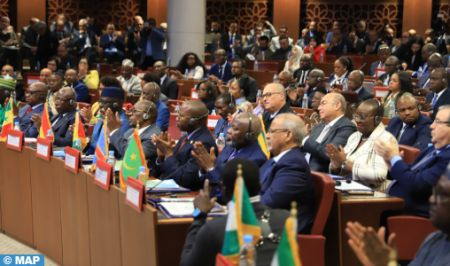
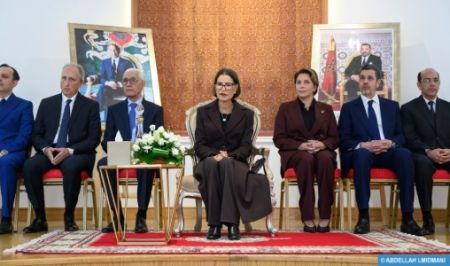
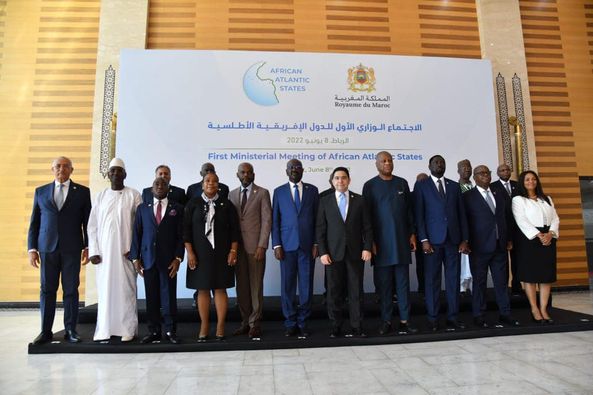
The ministerial segment of the Conference on African Victims of Terrorism, held in Rabat on Tuesday in partnership with the United Nations Office of Counter-Terrorism (UNOCT), endorsed the Rabat Declaration, which reaffirms the central position of victims in national and regional responses to terrorism and calls for strengthening the legal, institutional, and operational frameworks dedicated to their protection.
The Declaration calls for a comprehensive and solidarity-based approach built on the rights, dignity, and participation of victims in the development and implementation of counterterrorism policies. It encourages African states to consolidate their national mechanisms, harmonize their legal frameworks in accordance with international best practices, and guarantee victims’ access to justice and remembrance.
It also highlights the need to develop multidimensional support mechanisms, particularly in terms of psychosocial support, economic support, medical assistance, and legal protection, with a particular focus on women, children, vulnerable individuals, and the most affected communities.
The Declaration in turn highlights the importance of cooperation between African States and United Nations entities through the exchange of expertise, training, and the mobilization of international partners.
The text also recognizes the central role of victims and survivors in preventing radicalization and combating extremist ideologies, and promotes their meaningful participation in public policy, while striving for a strengthened cooperation between African States and UN entities.
The ministerial segment concluded with a unanimous call to further the momentum generated in Rabat, strengthen national capacities for victim support, and enshrine initiatives to integrate survivors into strategies to prevent and combat violent extremism.
In an opening address, Foreign Minister Nasser Bourita called for the adoption of an ambitious and determined African approach, based on the dignity of victims of terrorism, justice, and true collective responsibility in the face of the terrorist threat’s resurgence in Africa.
Bourita said that this continental meeting marks a crucial step in rebuilding African strategies by placing survivors at the heart of public policies and collective efforts to combat violent extremism.
The minister emphasized the need to see victims not only as people in need of support, but also as key players in prevention and resilience, who can contribute directly to the development of African responses that are more humane, more effective, and more grounded in the realities on the ground.
Bourita recalled that Africa remains the region most affected by terrorism, with a notable intensification of attacks, particularly in the Sahel and West Africa, where this violence has caused thousands of casualties and led to mass displacement, school dropouts, the destruction of entire communities, and the crumbling of social cohesion.
“Terrorism is not a merely transient event, but rather a tearing of the social fabric, a weakening of local economies, and a systematic attempt to instil despair and undermine the sense of security,” he said, referring to displaced communities, broken families, and youth deprived of a future.
The minister stated that this Conference is part of the guidelines of King Mohammed VI, who has made Africa a priority for Moroccan foreign policy, based on solidarity, cooperation, and the sharing of experiences, emphasizing that the Kingdom is acting in line with this royal vision through an integrated national strategy based on three complementary pillars: security vigilance, socio-economic development, and the consolidation of the religious sphere rooted in values of moderation and tolerance.
Bourita said that the main objective of the meeting is to transform recognition of victims into a concrete and structured African commitment. He also noted that the UNOCT Rabat Program Office was urged to play a key role in training, technical assistance, and support for victims at the regional level.
The conference was attended by the UN Under-Secretary-General, Head of the UN Office of Counter-Terrorism (UNOCT), Alexander Zuev, several African ministers, particularly from the Sahel states, as well as representatives of regional organizations, international experts, and African victims’ associations.