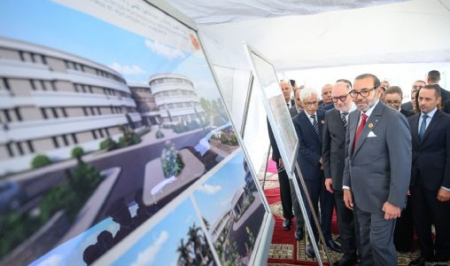
King Mohammed VI launched, on Wednesday in Casablanca region the construction works of a regional facility devoted to psychosocial rehabilitation of people suffering from mental and psychological disorders.
The $33 million facility will be built by the Mohammed V Foundation for Solidarity. This project shows the importance the Sovereign grants to the health sector, in general, and mental health, in particular.
The facility will provide support to patients during the process of stabilization and recovery through cognitive remediation therapy, specific psychotherapies and occupational activities.
It will also provide care for people with mental health issues by offering them psychosocial rehabilitation services and tailored training to enable them to acquire specific skills for their social and professional reintegration.
The regional facility, to be built on an 8-hectare site, will include a residential center with a capacity of 396 beds, including 84 for women, and a pavilion dedicated to therapeutic workshops and training.
It will house rooms for group therapy, psychology and psychiatry, sports, occupational therapy, observation and rest, hairdressing, professional training areas, and workshops in painting, music, and theater, in addition to a library.
The facility will also feature a health unit with rooms for psychoeducation and therapeutic education, general medicine consultations, psychiatry, psychology, dental care, and observation. It will include a logistics pavilion (kitchen, dining hall, laundry), an educational farm, sports fields, and administrative premises.
This project is part of an action plan led by the Mohammed V Foundation for Solidarity, aimed at supporting the national medical sector by strengthening existing healthcare offer, improving access to care for vulnerable populations, and integrating a complementary social approach into mechanisms for supporting patients and beneficiaries.