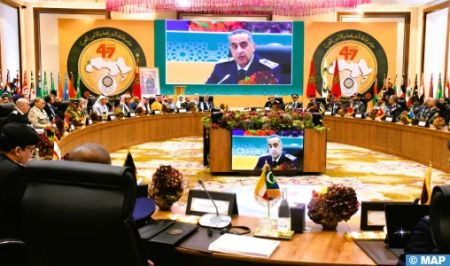
Morocco and the member states of the Gulf Cooperation Council have agreed on a joint action plan extending until 2030. The announcement was made Thursday night in Mecca by the Moroccan Minister of Foreign Affairs, Nasser Bourita, during the 7th Morocco-GCC joint ministerial meeting.
Bourita, who led the Moroccan delegation, emphasized the strength of the «strategic partnership» between Morocco and the GCC, describing it as «built on a solid foundation of synergy and solidarity».
He also noted with deep satisfaction the significant steps undertaken by the fruitful partnership between Morocco and the GCC, in its strategic, political, economic, human, cultural and development dimensions, in accordance with the High Guidelines of His Majesty King Mohammed VI and of His brothers, Their Majesties and Highnesses the leaders of the GCC States.
Bourita expressed «deep satisfaction with the significant progress» made in the partnership, highlighting its fruitful achievements. «It is this positive assessment of our strategic partnership that has led us to renew the joint action plan for a new period until 2030». said the Moroccan Foreign Minister.
He noted that “beyond the fraternal and historic ties of our leaders and our countries, our strategic partnership must also revolve around the exchange of economic benefits, making it more deeply rooted. This implies encouraging businessmen and investors on both sides to forge solid relations, through the establishment of an institutional framework and the exploration of investment opportunities capable of stimulating development and creating job opportunities.” In this connection, he welcomed the holding of the Morocco-CCG Investment Forum this year.
The investment Forum will serve as a platform to reassess and further develop cooperation. «This assessment is also an incentive to seek creative ways to develop this partnership and elevate it to higher levels», he added.
He also highlighted Morocco’s preparations to host major international sporting events, including the 2025 Africa Cup of Nations and the 2030 FIFA World Cup, positioning the country as a strategic gateway for Gulf states to Africa. «The world of 2030 is full of promising investment opportunities, providing a space for Gulf partnerships to engage in numerous projects», he said.
Bourita further pointed to key initiatives launched under King Mohammed VI’s leadership, such as the Nigeria-Morocco gas pipeline, the Atlantic Africa process, and efforts to facilitate Sahel countries’ access to the Atlantic Ocean, all of which present new opportunities for Morocco-GCC cooperation.
To strengthen the institutional framework of this partnership, Bourita proposed institutionalizing the Morocco-GCC summit as a key reference mechanism for cooperation, designating Morocco’s ambassador in Riyadh as the coordinating ambassador for the partnership, establishing a joint council of businessmen between Morocco and GCC countries, and streamlining the current 15 joint working groups into three or four strategic sectors.
The first Morocco-GCC summit took place on April 30, 2016, in Saudi Arabia, during which GCC states reaffirmed their support for Morocco’s sovereignty over the Sahara. The United Arab Emirates and Bahrain later demonstrated this support by opening consulates in the region. On the same day, GCC Foreign Ministers also held a meeting with Jordan, further reinforcing regional cooperation.