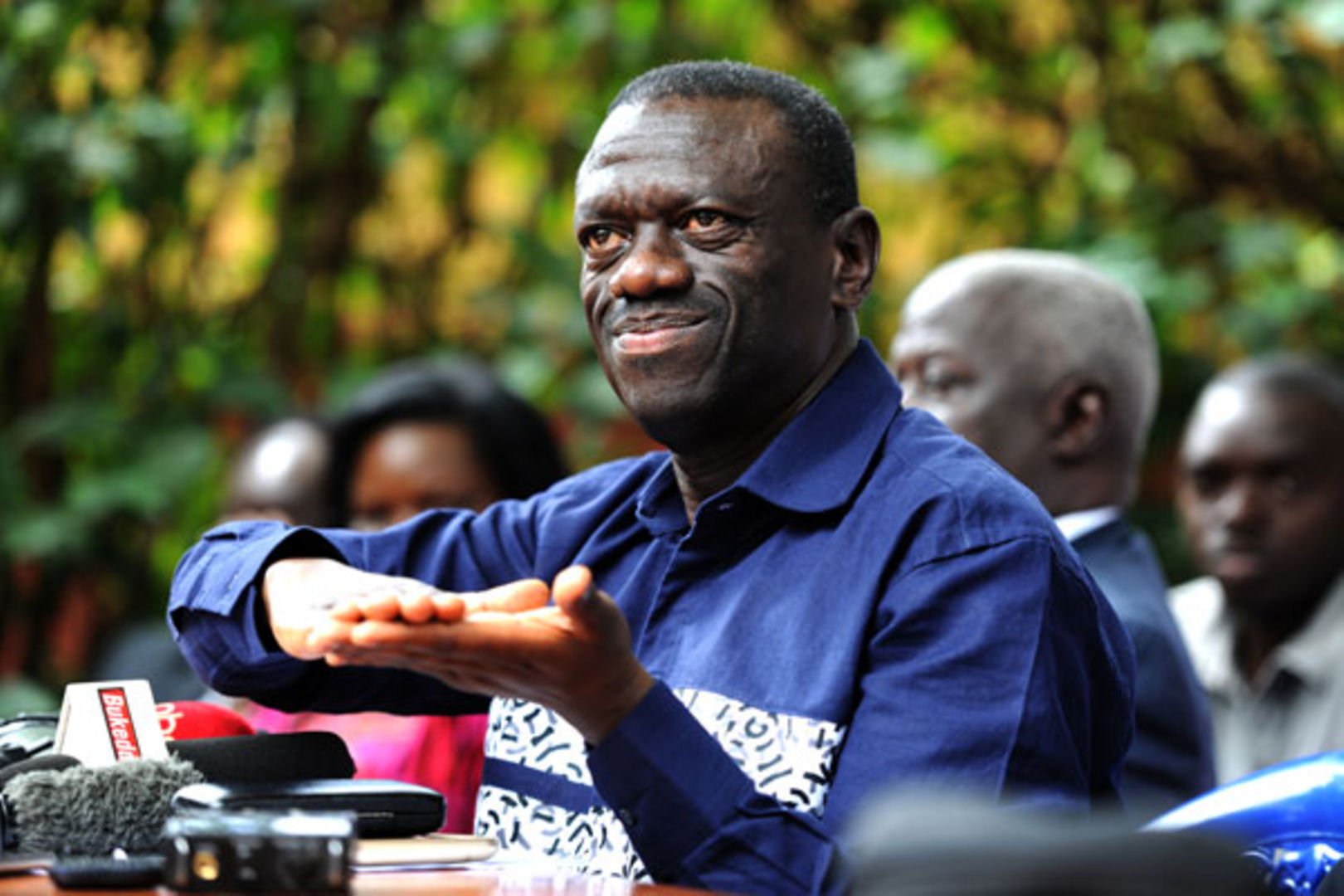
In Uganda’s tense political atmosphere, a landmark Supreme Court ruling has become the latest flashpoint in the case of Kizza Besigye, the opposition leader facing possible death penalty charges in a military court. The ruling, which declared civilian trials by military tribunals unconstitutional, has energized opposition figures demanding his immediate release.
Besigye’s journey from disappeared person in Nairobi to defendant in a Kampala military court has gripped the nation. The 68-year-old former presidential candidate, who once served as President Museveni’s personal physician, now faces treachery charges that could carry the ultimate penalty.
“Besigye is in Luzira now illegally,” declared opposition lawmaker Ibrahim Ssemujju Nganda, referring to the maximum-security prison where the four-time presidential candidate is held. Kampala Mayor Erias Lukwago echoed these sentiments, insisting that Ugandans are duty-bound to enforce the court’s decision.
The drama has deeper implications for Uganda’s political future. With elections approaching and uncertainty surrounding Museveni’s succession plans, Besigye’s case has become a lightning rod for concerns about democratic transition. Museveni’s defiant response – “the country is not governed by judges” – has only heightened tensions in a nation anxious about its political trajectory.
For Besigye, who has faced numerous arrests but never a conviction, this latest confrontation with authority unfolds amid mounting uncertainty about Uganda’s democratic future.