Morocco’s government presented its 2027 draft Finance Bill, providing for a series of measures to boost purchasing power, chief among which exempting 87% of employees who earn monthly salaries less than 10,000 dirhams from the income tax.
The draft budget is the first under Head of Government Fatima Ezzahra El Mansouri, whose government coalition focuses on boosting purchasing power, expanding social protection and maintaining fiscal discipline.
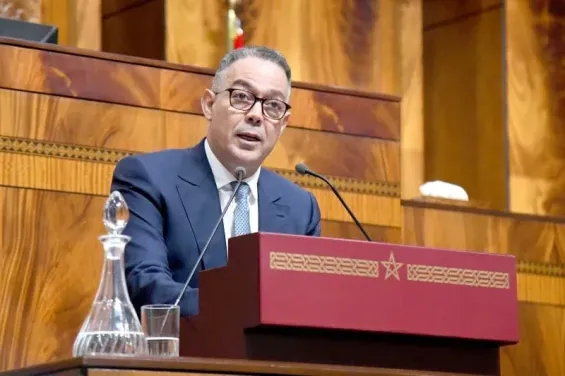
Economy, Finance and Public Performance Minister Fouzi Lekjaa outlined the main measures before a joint session of the two chambers of the Parliament.
The draft targets a budget deficit of 3% of GDP while projecting ordinary revenues of 482.42 billion dirhams, including 437.4 billion in tax receipts.
Most beneficiaries from income tax exemptions or cuts are expected to gain around 500 dirhams a month.
The first phase will cost the treasury 5.5 billion dirhams. By 2031 the top marginal rate is scheduled to fall from 37% to 30%, with the tax scale simplified to three brackets (10%, 20% and 30%).
The minimum pension will rise to 1,700 dirhams a month, benefiting roughly 500,000 retirees, including more than 150,000 widows.
The government aims to lift the floor to 3,000 dirhams by the end of the legislative term.
Widows’ entitlement to their late spouses’ pensions will increase from 50% to 100%, covering about 431,000 beneficiaries.
Direct social assistance will see its monthly minimum raised from 500 to 600 dirhams. In addition, the state will cover electricity bills of 100 dirhams or less for approximately six million households, representing around 60% of customers.
The health budget climbs to 45.4 billion dirhams (+3 billion), accompanied by 8,000 new posts. Education, higher education and vocational training receive 121.3 billion dirhams (+5.3 billion) and 17,874 additional positions.
Overall, the draft creates 34,454 new public-sector budget posts. Lekjaa said the broader social package totals around 62 billion dirhams.
The ceiling for advance commitments on military equipment and defense-industry development rises 21% to 190.5 billion dirhams. Public investment payment credits stand at 138.03 billion dirhams, while the state’s gross financing need is estimated at nearly 159 billion dirhams.
The draft Finance Bill now enters parliamentary scrutiny. Officials present it as a balance between immediate support for households and the medium-term goals of fiscal sustainability, youth employment and strategic investment.