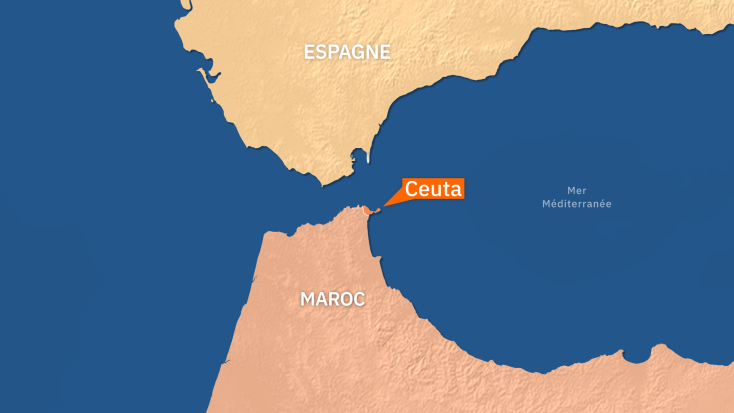
Amid floods in Catalonia, a housing crisis and a divided political class facing early elections, the Spanish king Felipe VI and Queen Letizia choose to look elsewhere by deciding a visit to the occupied enclaves of Ceuta and Melilla to appease the far right and provoke Morocco.
The Oct 13-15 visit announcement has been widely viewed in Morocco as an unnecessary provocation that runs counter to the spirit of the strengthened bilateral partnership between Rabat and Madrid.
It will be the first official visit by the current Spanish monarch to the two territories since his accession to the throne in 2014, and the first by a Spanish king in nearly two decades.
The last such visit was made by King Juan Carlos I in November 2007. Although the Spanish government of Pedro Sánchez will not take part in the trip, the decision was taken jointly by the Royal Household and the executive.
Coming shortly after the summer migration tensions around Ceuta, the timing is regarded as particularly poorly chosen.
Morocco and Spain have in recent years built one of their most resilient strategic partnerships, based on mutual trust, joint management of migration flows, and coordinated action against criminal networks.
The visit risks reopening a colonial-era territorial dispute at a moment when both countries had successfully moved beyond such anachronisms.
Moroccan authorities and observers note that Rabat has consistently demonstrated responsibility by deploying significant resources to secure its northern borders and prevent irregular migration, often at considerable human and material cost.
In contrast, parts of the Spanish political class, particularly the Popular Party and the far-right Vox, have used the recent incidents to fuel anti-Moroccan rhetoric and revive outdated colonial narratives.
By proceeding with the visit in this charged climate, the Spanish Crown is seen as lending institutional weight to the most extreme voices in Spanish politics rather than consolidating the constructive relationship carefully rebuilt with Morocco.
For many in Morocco, the planned royal trip to territories considered occupied Moroccan land constitutes a diplomatic misstep that undermines the climate of trust the two neighbors had worked hard to restore.