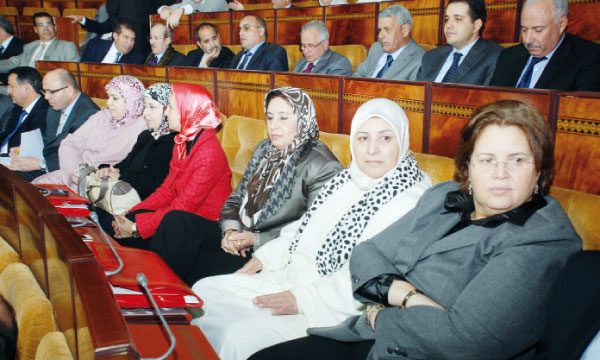
Morocco is implementing new statutory mechanisms across its electoral framework to strengthen women’s representation in Parliament ahead of the 2026 general elections, reserving certain regional constituencies exclusively for female candidates while requiring greater gender balance within political parties’ founding structures.
The overhaul aims to improve procedural transparency, boost civic turnout and deliver more balanced gender representation in the House of Representatives, building on earlier legislative milestones securing women’s institutional role in elected assemblies.
A central provision of the law governing the House of Representatives converts regional electoral constituencies, previously mixed lists, into seats reserved exclusively for female candidates. Through this allocation, women will directly occupy 90 of the House’s 395 seats, guaranteeing an institutional baseline of 22.8 percent of parliamentary seats before local constituency results are even tallied. The law also protects the continuity of seats won by female MPs in by-elections or substitution procedures, closing loopholes that could have allowed reserved seats to be reassigned to male candidates.
The reform does not prevent women from running independently in open local and district-level constituencies; the regional list mechanism instead functions as an incubator, letting female candidates elected through it build campaigning experience and a national profile before contesting competitive local races. These protections come with public campaign subsidies for female-led candidate slates in regional districts, contingent on lists composed entirely of women under 35 and sponsored by registered parties or accredited independent coalitions, intended to draw young professionals into parliamentary politics. New political parties must also include at least four women in their founding executive, with women required to make up at least 20 percent of the 2,000 mandatory founding signatories, or 400 women.
Fifteen years after the 2011 Constitution enshrined the principle of institutional gender parity, women’s presence in elected national office remains short of statutory targets: women hold 95 of the House’s 395 seats, or 24.3 percent, while representation in the upper chamber sits between 11 and 12 percent, and women’s presence on parties’ national executive boards stands at just 8 to 9 percent despite women making up over half the electoral roll. The Democratic Association of Moroccan Women has pointed to entrenched party hierarchies as the main obstacle to translating constitutional parity guarantees into practice.
The scale of the structural barriers showed clearly in 2021: female candidacies made up just 29.87 percent of municipal slates against 70.13 percent for men, while in open local parliamentary districts the success rate for female candidates fell below 2 percent, meaning 90 of the 95 female MPs elected that year entered the legislature through reserved regional quotas rather than competitive local races.