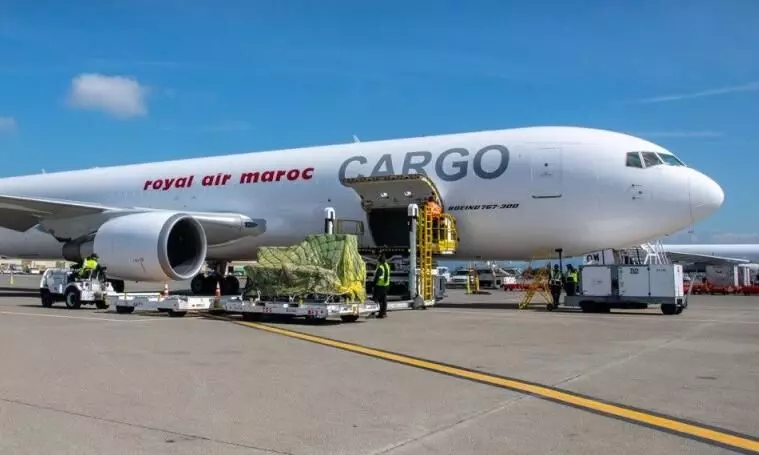
Royal Air Maroc Cargo is focusing its growth strategy on high-value trade flows between Asia and Africa, positioning Casablanca as a key redistribution hub serving more than 30 destinations across the continent, Moroccan media reported.
The cargo unit of Morocco’s national carrier aims to capitalize on rising demand for electronics, e-commerce shipments, industrial goods and time-sensitive products, prioritizing value over volume, Barlamane reported.
The Casablanca platform has an annual handling capacity of 200,000 tons and is designed to cut transit times by up to 24 hours compared with traditional global hubs.
A central component of the strategy is the airline’s link with Beijing, which is seen as a strategic gateway to Asian markets.
The route is driven by strong African demand for high-value imports such as electronics and industrial components, with outbound African exports helping to balance capacity on return legs.
Royal Air Maroc Cargo relies on a flexible fleet combining the belly capacity of Boeing 787 passenger aircraft with a dedicated Boeing 767 freighter capable of carrying up to 45 tons.
This model allows the airline to adjust capacity across routes linking Asia, Africa, Europe and the Americas without committing aircraft to fixed corridors.
Casablanca’s role as a transit hub is based on speed and operational control, with streamlined ground handling and direct connections aimed at minimizing delays for sensitive cargo such as perishables, pharmaceuticals and electronic components.
The company is also investing in specialized infrastructure, including temperature-controlled facilities and digital tools for real-time tracking and coordination, to ensure reliability across its expanding network.