Morocco’s expanding religious diplomacy took center stage this week in Niger, where African scholars and officials underscored the pivotal role of the Royal institution of the Commandership of the Faithful in promoting stability and moderation across a continent facing mounting security and ideological challenges.
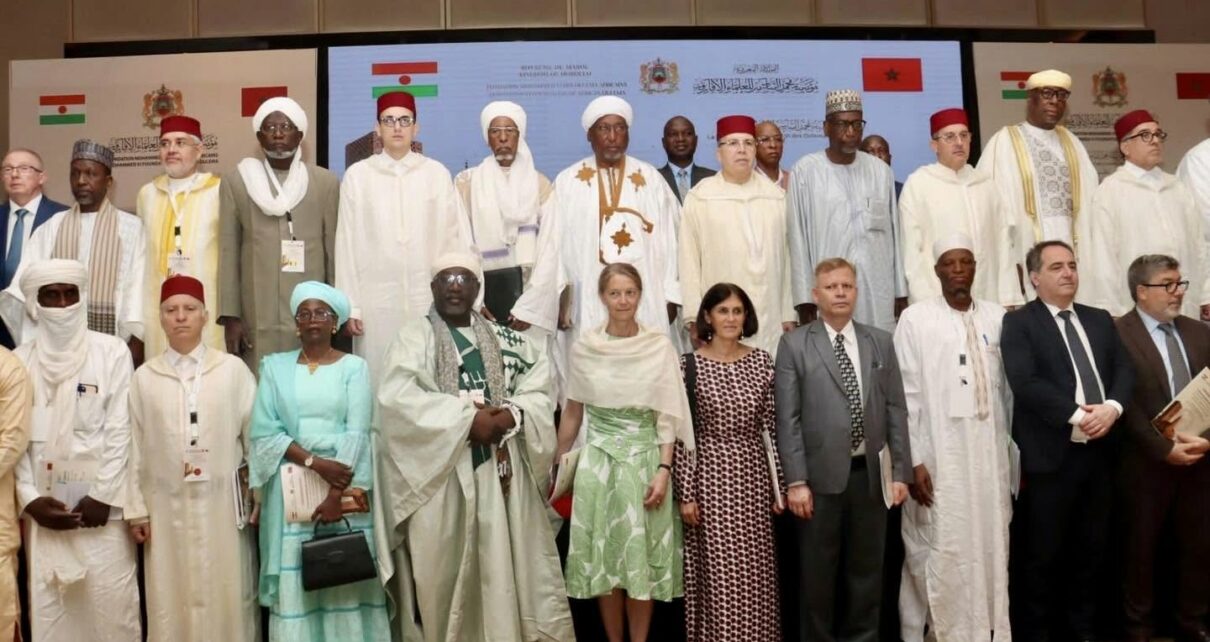
The two‑day colloquium, held on June 6–7 in Niamey and organized by the Mohammed VI Foundation of African Ulema, brought together religious experts from across Africa to reflect on how shared spiritual values can counter extremism and reinforce social cohesion, Morocco’s official media reported.
Discussions stressed that in the Sahel, where insecurity and radicalization intersect, religion is a decisive factor in peacebuilding and community resilience, with participants emphasizing the need to preserve tolerance and coexistence.
At the heart of the discussions was Morocco’s model of religious governance, anchored in the King’s role as Amir al‑Mu’minin, or commander of the faithful. This institution, combining religious legitimacy with state authority, enables Morocco to project a coherent vision of Islam rooted in moderation.
Analysts note that the model, based on Maliki jurisprudence, Ash‘ari theology, and Sufi traditions, has become a credible reference across Africa in countering extremist interpretations and maintaining doctrinal unity.
Beyond academic exchanges, the Niamey meeting showcased the strength of Morocco’s cooperation with African partners, particularly in the field of religious education, rooted in south-south cooperation and intra-African solidarity.
The imam‑training program at the Mohammed VI Institute in Rabat remains a flagship initiative, with hundreds of Nigerien imams benefiting from scholarships and structured training over recent years.
This effort is part of a broader continental expansion. In July 2025, Morocco signed a new agreement with Mali to train 400 additional imams and religious guides, building on earlier programs that have already produced more than 800 graduates.
These programs emphasize not only theology but also conflict prevention and community leadership, reflecting a comprehensive approach to countering radicalization in fragile environments.
Over the past decade, Rabat has deployed a multi‑layered soft power strategy combining mosque construction, scholarly exchanges, and institutional partnerships across Africa.
From Abidjan to Conakry, Mohammed VI mosques stand as symbols of this strategy, reflecting Morocco’s commitment to promoting a moderate and tolerant Islam while strengthening ties with local communities.