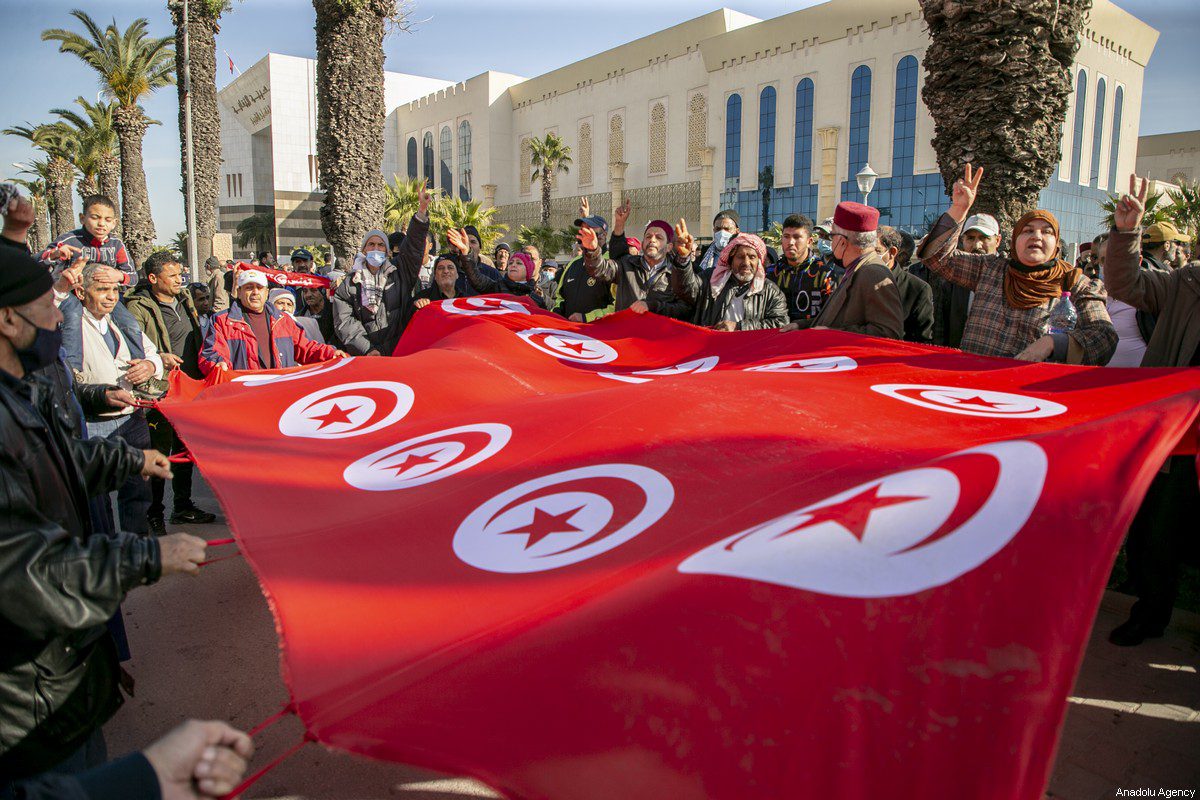
Five years after President Kais Saied seized extraordinary executive powers on July 25, 2021, Tunisia’s human rights situation has deteriorated dramatically, said Human Rights Watch in its latest update report issued Tuesday
“What began as a slide back into authoritarianism has hardened into systematic repression of civil society organizations, journalists, political opponents, independent lawyers, and migrants”, said the Human Rights organization.
President Saied has repeatedly accused civil society organizations of serving foreign interests, calling them “traitors” and “mercenaries.” Since May 2024, Tunisian authorities have systematically targeted civil society organizations through arbitrary arrests, detentions, financial and criminal investigations, and administrative suspensions. This campaign threatens to collapse one of the last remaining pillars of democracy in the country.
The Tunisian regime has prosecuted at least 46 people connected to NGOs, using vague provisions of the 1975 Law on Passports and Travel Documents, the 1968 Law on the Status of Foreigners, the 2015 Counterterrorism and money laundering law, and financial crimes legislation to criminalize their ordinary work.
Several NGO workers have been arbitrarily detained in connection with their organizations’ legitimate activities, seven of whom were held in pretrial detention beyond the 14-month legal maximum.
Tunisian authorities have also launched arbitrary financial and criminal investigations against dozens associations or NGOs. The authorities have demanded ten years of financial records of these associations, summoned staff and partners, and froze bank accounts—halting their operations and generating significant debt for targeted groups.
HRW said the widespread and systematic use of such investigations against a large number of civil society organizations raises serious concerns over the government’s weaponization of such processes and suggests a pattern of deliberate intimidation of civil society organizations.
President Saied has dismantled the independent High Judicial Council in 2022 and replaced it with a provisional body under executive control. Through two decree-laws, he granted himself extensive powers to dismiss and intervene in their careers.
Since then, courts have ordered the suspension of civil society associations and issued politically motivated convictions within a justice system under executive influence. Pretrial detention—which international and Tunisian law treat as an exceptional measure—has become routine.
For their part, defense lawyers have come under direct attack for the legitimate exercise of their profession. On April 19, 2025, a Tunis court sentenced 37 people—including lawyers, academics, journalists, and opposition figures—in the “Conspiracy Case,” issuing sentences of between 4 and 66 years in a mass trial that concluded after just three sessions.
Furthermore, Tunisia’s media landscape, under Kaiss Saied tenure, is shrinking rapidly due to the government crackdown. The authorities have used Decree-Law 54 on Cybercrime as a primary a tool of repression against journalists, bloggers, and activists.