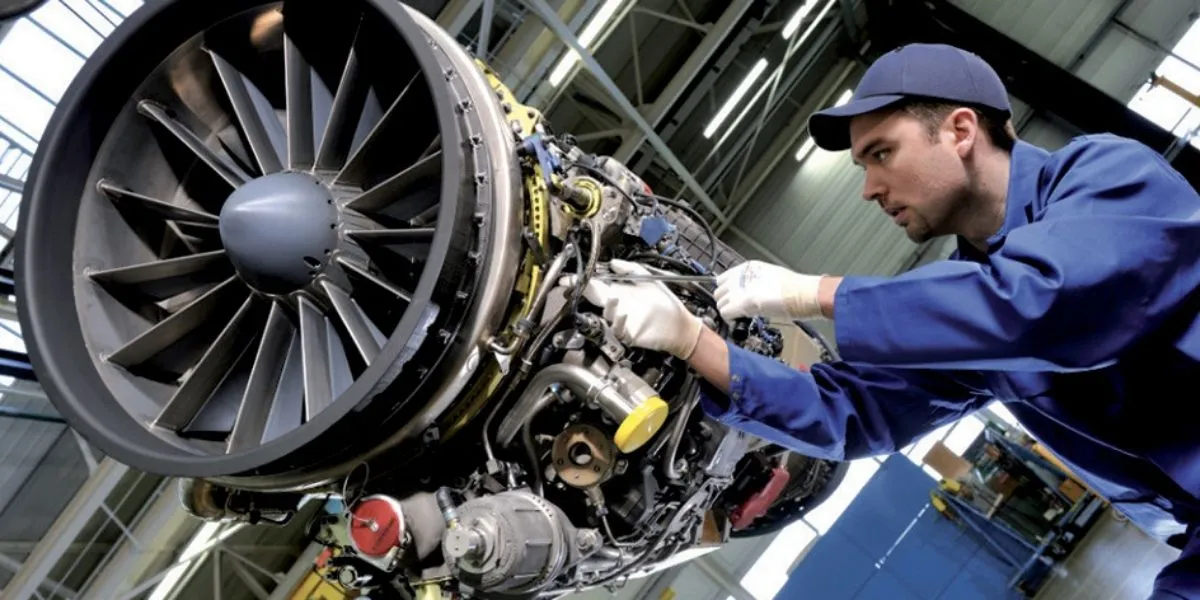
Morocco’s aerospace industry is undergoing a structural shift, moving beyond simple assembly subcontracting to the production of increasingly complex and technically demanding components. Driven by the arrival of global manufacturing leaders and a progressive deepening of the industrial value chain, the sector is establishing itself as a high-technology hub rather than a low-cost outsourcing destination, commented L’Economiste in an analysis of the sector published Monday.
The Midparc industrial zone at Nouaceur has emerged as the epicenter of this transformation, hosting around thirty major international groups. Airbus operates two facilities there, while composites leader Hexcel is developing its third site. Other significant players including Eaton, Thales, NSE, Masterflex, and the Ateliers de la Haute-Garonne further reinforce the zone’s value chain. The French industrial group Daher is preparing to transfer part of its standardized component production for the Airbus A320, A330, and A350 programs from Tarbes to its Tangier site — a transition scheduled between September 2026 and the end of 2027. American engine manufacturer Pratt and Whitney inaugurated a major factory at Midparc in April, with 200 jobs expected to be created by 2030, while Safran is expanding its Moroccan production of landing gear assemblies, a high-precision segment governed by stringent international certification requirements, the daily recalled.
The sector currently comprises 155 companies, generates three billion dollars in export revenues, and employs 27,000 people. The stated ambition is to double export revenues within five years, supported by an annual growth rate of 15 percent.
Hamid Benbrahim El Andaloussi, honorary president of GIMAS, the Moroccan aerospace manufacturers’ association, was quoted by the daily as saying that the diversity of global groups committing to Morocco will drive both quantitative and qualitative expansion.
This investment momentum has exposed a critical constraint: the available industrial land at Midparc is approaching saturation. GIMAS, in collaboration with La Caisse de Dépôt et de Gestion (CDG) and the Ministry of Industry, is conducting studies to identify new land reserves and plans a medium-term extension of the Nouaceur platform, El Andaoussi explained.
Industry professionals note that Morocco’s fiscal incentives — including a five-year tax exemption followed by a standard 20 percent rate — while competitive, are no longer the primary draw. The real and durable competitive advantage, in their assessment, lies in the availability of qualified, technically trained talent and the depth of Morocco’s aeronautical ecosystem — a combination that is proving difficult for competing locations to replicate.