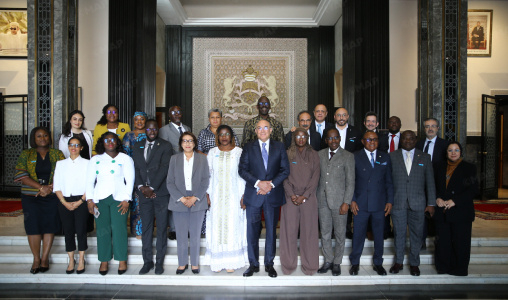
The African Network of Open Parliaments, a framework for the exchange of experiences between parliaments of “Open Government Partnership (OGP)” member countries and those seeking to join it, was set up on Wednesday at the headquarters of Morocco’s House of Representatives.
The African Open Parliaments Network is meant to be a continental framework for inter-parliamentary cooperation on transparency and citizen engagement.
The African Open Parliaments Network will serve as the continental architecture for dialogue, reform monitoring, and the promotion of transparency, citizen participation, integrity, and institutional openness across African legislative institutions. Morocco’s hosting of the network’s inaugural launch reinforces a pattern of Rabat positioning itself as a convener and incubator for African governance innovation — a role consistent with its broader ambition to be the continent’s reference partner on institutional development.
Rabat was also chosen as host of this Network’s Permanent Secretariat, and the House of Representatives as its chair.
The decisions were made during the parliamentary forum held in Rabat under the theme “Open Parliaments in Africa” that brought together lawmakers, civil society representatives, and international partners. The Forum called for a new model of legislative transparency capable of restoring declining levels of public trust in political institutions across the continent.
House of Representatives Vice President Mohamed Ghayate opened the forum with a framing that set the tone for the discussions: open government and open parliaments are no longer an intellectual luxury, he argued, but a democratic necessity — a direct response to citizens’ growing demand for accountability, transparency, and genuine participation. Parliament, he stressed, occupies a central role in consolidating these principles because it embodies the popular will and exercises oversight over the executive. Morocco’s 2011 Constitution, he noted, had embedded the foundations of participatory democracy through the right to petition and the right to access information.
Aidan Eyakuze, Director General of the Open Government Partnership, argued that openness must extend beyond central governments to encompass all institutions responsible for legislation, citizen representation, and executive accountability. He called for a shared-responsibility model in which central governments, local authorities, independent institutions, and parliaments each carry a portion of the transparency burden, rather than confining open government initiatives to the executive branch alone.
Nicole Nkoa, Director of the Francophone Open Government Support Program, situated the forum within a continental process that had been building since the 2022 Marrakech Summit, where fifteen African legislative institutions adopted the Marrakech Declaration committing to openness agendas. Parliamentary networks, she explained, will facilitate the exchange of best practices and deepen inter-parliamentary cooperation in designing and evaluating open parliament action plans.
African civil society representative Sammy Obeng emphasised that civil society must be formally embedded in the network’s structures, not invited as occasional guests but integrated as permanent partners.