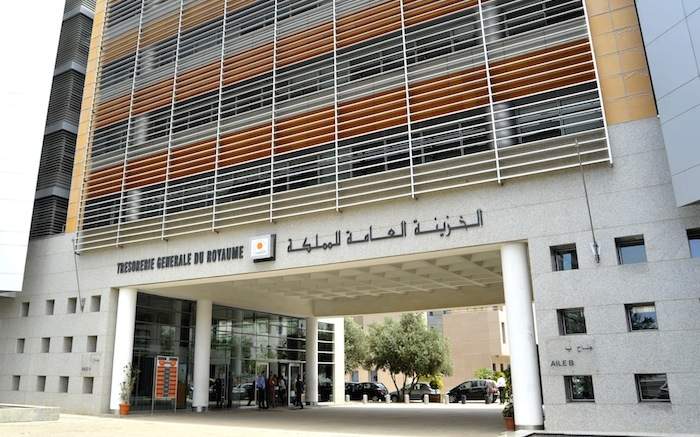
Morocco’s public finances entered the second quarter of 2026 in considerably better shape than a year earlier, driven by robust first-quarter tax receipts that have allowed the Treasury to reduce its reliance on the domestic bond market and to approach its funding strategy from a position of relative comfort. According to an analysis published by Attijari Global Research, the budget registered a surplus of 5.1 billion dirhams at end-March 2026, compared with a surplus of only 770 million dirhams in the same period a year earlier — an improvement driven primarily by stronger corporate tax and income tax collections.
The impact on Treasury operations has been tangible. With cash liquidity strengthened, the Treasury has been able to adopt a more selective posture in its domestic bond issuance program: AGR notes that the rate of satisfaction of demand in the April auctions did not exceed ten percent — a historic low. This means the Treasury absorbed only a small fraction of investor bids, accepting only the cheapest paper available, and leaving the rest on the table. The consequence is a measurable easing of government borrowing costs and a normalization of the yield curve at the short and medium end.
The structural context, however, remains demanding. AGR estimates that Morocco’s gross domestic financing needs for the remainder of 2026 amount to approximately 138.2 billion dirhams, comprising 60.6 billion in residual budget deficit and arrears financing (as projected in the 2026 Finance Law) and 77.6 billion in maturing debt redemptions. Of the total, 112.5 billion is expected to be raised on the domestic market at a pace of roughly 12.5 billion dirhams per month — an increase from the eight billion monthly pace estimated just one month ago, reflecting updated projections for the pace of capital expenditure.
The public debt trajectory remains under surveillance. AGR projects total Treasury debt reaching 1,211 billion dirhams by end-2026, from 1,156 billion in 2025. Domestic debt would reach 887 billion dirhams, up 4.5 percent, while external debt would reach 324 billion, up 5.7 percent. Expressed as a share of GDP — using the 4.6 percent growth rate embedded in the Finance Law — the Treasury debt ratio is projected at 65.5 percent for the full year, with the budget deficit contained at 55.4 billion dirhams, or 3 percent of GDP.
The combination of a stronger-than-expected revenue start to the year and a disciplined approach to market issuance positions Morocco’s Treasury management relatively well for the pressures ahead. The second half of 2026 will be demanding, with the pre-electoral period generating spending pressure and the full weight of the infrastructure investment program bearing down on the public accounts. But the first-quarter surplus provides a cushion that, twelve months ago, the Treasury did not have.