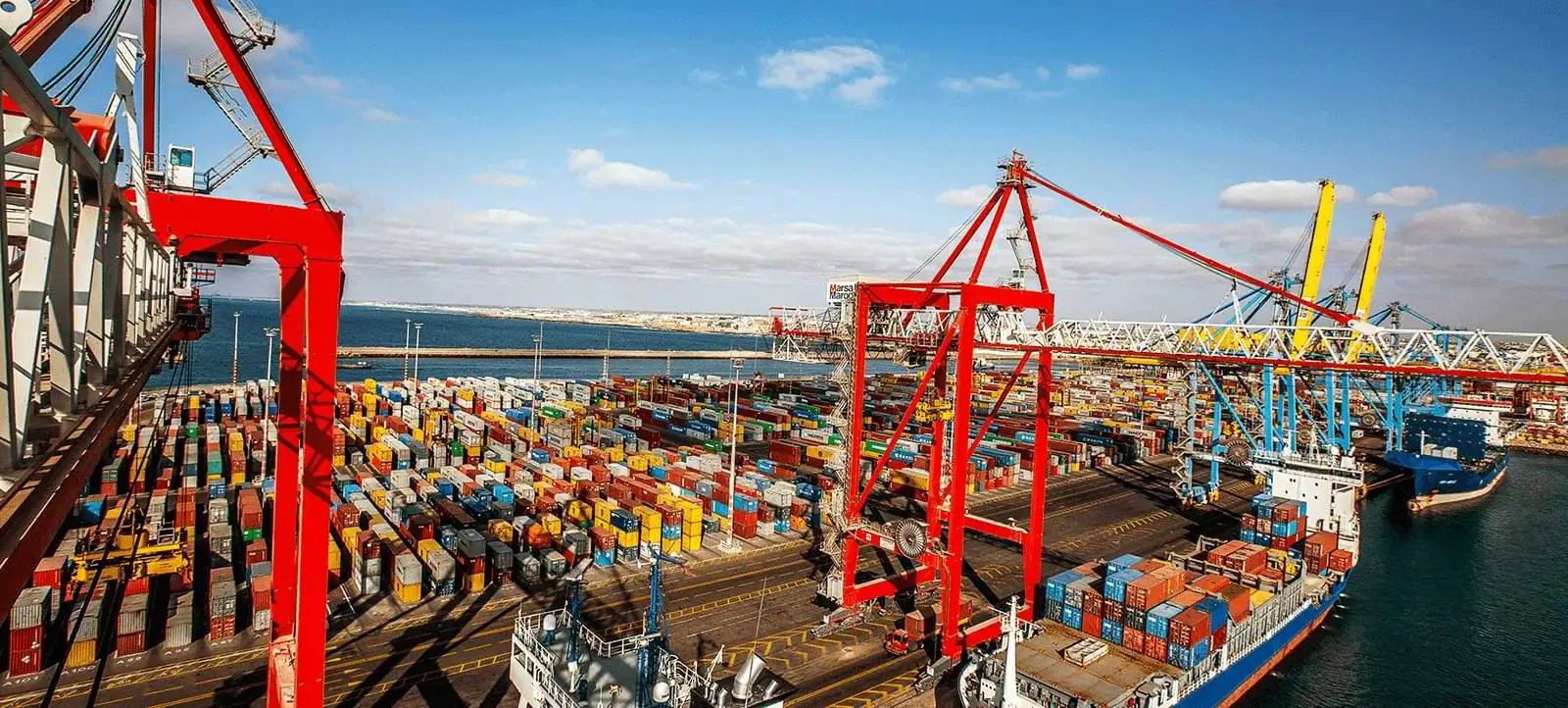
Tanger Med is emerging as a key stabilizing hub as global shipping disruptions force carriers to reroute vessels around Africa, extend transit times and impose sharp freight surcharges.
Port officials and operators say the hub’s position at the Atlantic–Mediterranean crossroads is reinforcing its role in absorbing redirected flows, even as the global crisis drives costs sharply higher.
While no vessel calls have been cancelled at Tanger Med, carriers have reconfigured routes to maintain schedules amid mounting security risks, fuel price spikes and the closure of key maritime corridors.
Container freight rates have climbed steeply. Shipping lines have introduced exceptional charges, including war‑risk, conflict and deviation surcharges, which now range from $1,500 to $3,300 per container, and up to $4,000 for certain equipment, industry sources told Le360.
Base rates on Morocco–East Asia routes have risen by an additional $700 to $1,000 per container.
Marine fuel (VLSFO) prices have surged more than 35% in a week following initial strikes, and more than 100% in some bunkering ports, prompting widespread Emergency Bunker Surcharges even on routes not directly passing through conflict zones.
Port authorities remain in close coordination with carriers to prevent congestion and maintain service levels. Industry officials say the ongoing crisis could accelerate a deeper reconfiguration of global maritime routes, with Africa‑round itineraries potentially becoming long‑term alternatives.
Meanwhile, the Strait of Gibraltar, through which roughly 110,000 ships a year transit, has reaffirmed its role as the world’s busiest strait by volume, serving as a resilient, multi‑purpose gateway linking Europe, Africa, the Atlantic and the Mediterranean.