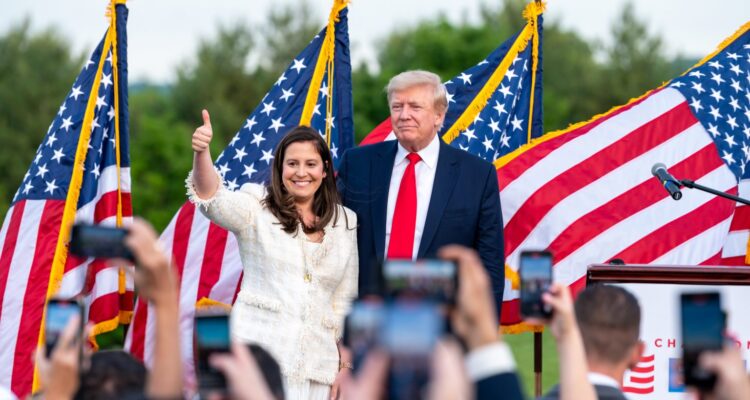
A new boost emerged this week for a House bill seeking to require the US government to formally designate the Algeria-backed separatist Polisario militias as a foreign terrorist organization, as Representative Elise Stefanik became the latest lawmaker to join the bipartisan initiative.
Her support brings to 11 the number of co‑sponsors backing the measure, which has been steadily gathering momentum since its introduction.
Originally filed on June 24, 2025, the bill was spearheaded by Republican Joe Wilson and Democrat Jimmy Panetta, with early backing from Mario Diaz‑Balart, Jefferson Shreve, Randy Fine and Lance Gooden. The coalition expanded in 2026 with the additions of Pat Harrigan, Zachary Nunn, Don Bacon, Claudia Tenney, and now Stefanik, reflecting a widening congressional front focused on allegations of Polisario‑Iran cooperation and regional destabilization.
Stefanik’s endorsement follows a string of recent sign‑ons, including Tenney on March 9 and Bacon less than a week earlier, underscoring the acceleration of political support for the proposal across the House.
A parallel effort is underway in the Senate. On March 13, 2026, Senators Ted Cruz, Tom Cotton and Rick Scott introduced the Polisario Front Terrorist Designation Act of 2026.
The Senate bill warns of the growing intelligence collaboration between the Polisario and Iran as well as Iranian proxies affiliated entities. Senator David McCormick joined the bill on March 23, adding further weight to the Senate push.
Both measures would compel the administration to report on potential joint military activities, weapons transfers, including drones, and intelligence links, and could trigger financial, travel and asset‑related sanctions should a designation be adopted.
The legislative drive comes as Washington intensifies scrutiny of Iranian influence networks in North Africa and the Sahel. US officials have repeatedly expressed concern about Tehran’s expanding reach in the region, with supporters of the bills arguing that the Polisario fits into that pattern.
The US administration has reiterated and anchored its recognition of Morocco’s sovereignty over the Sahara, consistent with the policy announced in December 2020, and has reiterated support for a political solution based on the Moroccan autonomy initiative.
The UN General Assembly’s adoption of Resolution 2797, which welcomed the autonomy plan as a credible and serious basis for a settlement, has further reinforced diplomatic backing for Rabat’s position.