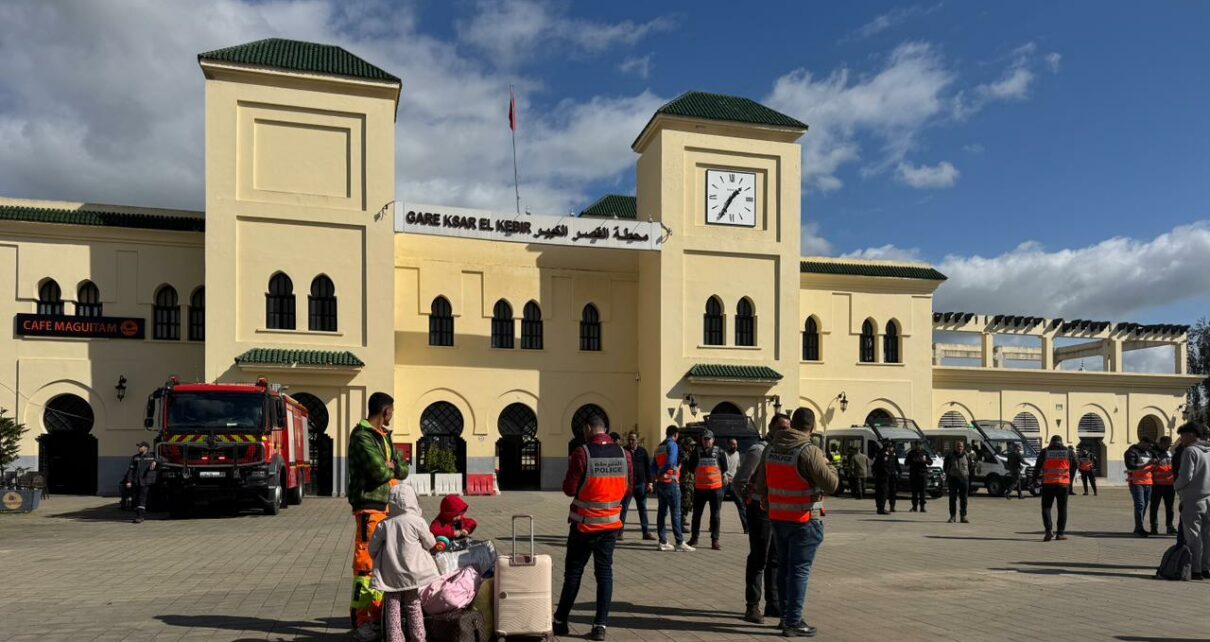
Moroccan authorities have given the green light for the return of all residents to flood stricken Ksar El Kebir, marking the end of a crisis management test that saved lives.
The floods that hit northern Morocco between late 2025 and early 2026 constituted one of the country’s most severe hydrological shocks in decades.
Morocco faced widespread inundation, and major disruptions to infrastructure and agriculture, yet managed the crisis through coordinated evacuation, logistics, and reconstruction measures that underscored the functioning of core state institutions.
Rainfall across Tangier, Chefchaouen, Kénitra, and Tétouan reached levels far above historical norms, with some areas recording more than three to four times their annual totals between September 2025 and February 2026. In the Loukkos and Sebou basins, soils and river networks became saturated.
Pressure on major dams, including Oued El Makhazine and Al Wahda, was intense. Both of which reached critical thresholds that required controlled water releases. This combination of upstream rainfall and downstream dam discharges produced significant flooding across the Loukkos and Gharb plains, submerging agricultural land and affecting several towns, including Ksar El Kébir, Sidi Kacem, and Sidi Slimane.
A total of 188,000 residents were moved from at‑risk areas through a series of preventive and orderly evacuations. Authorities prioritized vulnerable households and coordinated the temporary relocation of livestock and farm assets to reduce economic loss. Temporary shelters were rapidly established and supplied with food, drinking water, sanitation facilities, and medical care for evacuees.
The government activated formal disaster mechanisms by declaring the affected areas as disaster zones, enabling rapid financial and legal mobilization.
Joint Command
The Royal Armed Forces, civil protection units, regional authorities, and social services operated under a unified command structure. Their work covered search and rescue operations, evacuation, shelter management, food distribution, health support, infrastructure clearing, and the securing of hazardous zones.
This joint command reduced duplication of effort and helped ensure consistency across affected provinces.
As floodwaters receded, the authorities supervised a phased and orderly return of residents to their homes. Returns were authorized only when safety conditions were met, including structural assessments of dwellings, reactivation of water and electricity services, and the stabilization of local road networks.
The evacuees used trains and buses to return to their homes free of charge. Upon arrival, they were offered foodstuffs while cash compensations are being paid at 6000 dirhams per household.
Under Royal Instructions, the government launched a 300‑billion‑dirham national aid and reconstruction plan, covering compensation for families, support for farmers, rehabilitation of damaged public infrastructure, and assistance for businesses affected by prolonged disruptions.
The Moroccan flood response drew comparisons with dysfunctions north and South of the Mediterranean. It also demonstrated practical crisis‑management capabilities across several domains: early evacuation, multi‑agency coordination, rapid deployment of logistical assets, maintenance of essential services, and structured recovery planning. The ability to move large populations safely, protect critical infrastructure, and stabilize economic activity reflected institutional capacity rather than improvisation.