In a ceremony that could best be described as “Hollywood meets heavy industry,” Algeria this week unveiled its brand-new Ghar Djebilet–Béchar railway line, the first infrastructure project in the world designed to transport a mine that, so far, exists mainly as a PowerPoint slide and a dream.
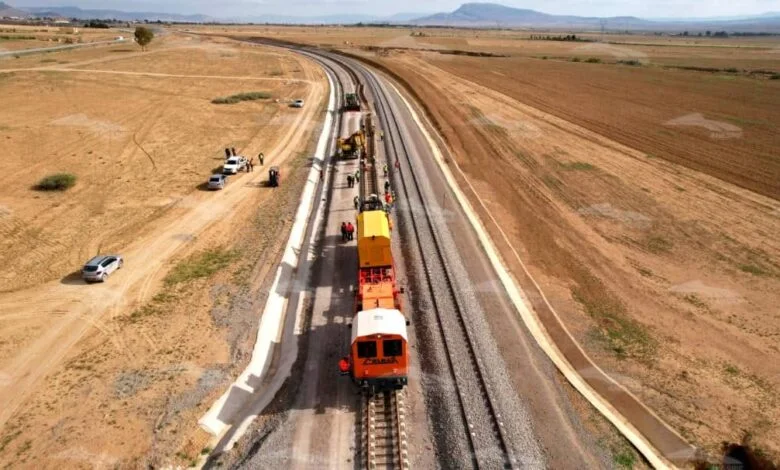
The ribbon-cutting took place somewhere in the vast southwestern desert, where invited guests were treated to an atmosphere of epic national triumph, complete with triumphant music, choreographed crowds, and new trains.
The fact that the showcased freight wagons looked suspiciously like grain carriers did not dampen enthusiasm.
Public broadcasters spent the week airing a near-constant stream of drone shots, heroic voiceovers, and animations depicting a futuristic mining megacity rising from the sands. Viewers at home were assured that Ghar Djebilet is destined to rival the Ruhr Valley, the American Midwest.
On the ground, however, the available footage suggests that the “industrial complex” currently consists of a very large hole, several piles of unprocessed ore, and enough empty desert to host a dozen international film festivals.
No footage was available of promised giant extraction machines, treatment plants, worker housing or the actual mine itself.
But the railway was there! In a location that has long been described as holding 3.5 billion tons of iron ore, a number so impressive it’s become the project’s main personality trait.
Less discussed is the ore’s notorious phosphorus content, which is so high that steelmakers would need a chemistry PhD and a miracle to make it usable.
Experts have been politely noting for decades that the ore requires extremely costly dephosphorization and huge amounts of water in a desert environment.
State media and the president himself were more fixated on the railway that the project’s viability and profitability.
The new railway will eventually carry ore nearly 1,000 kilometers across the Sahara to northern ports. At the moment, however, the only thing using the tracks is the inaugural train, which left the mine last week.
Despite doubts from engineers, economists, and anyone who has ever seen a balance sheet, the project moves ahead with unwavering momentum. Supporters say it will transform Algeria into an industrial powerhouse. Critics say it may transform billions of dollars into warm sand.
The analysts who venture to criticize the project are silenced. Djelloul Slama was arrested just after criticizing the economic viability and sustainability of the project.