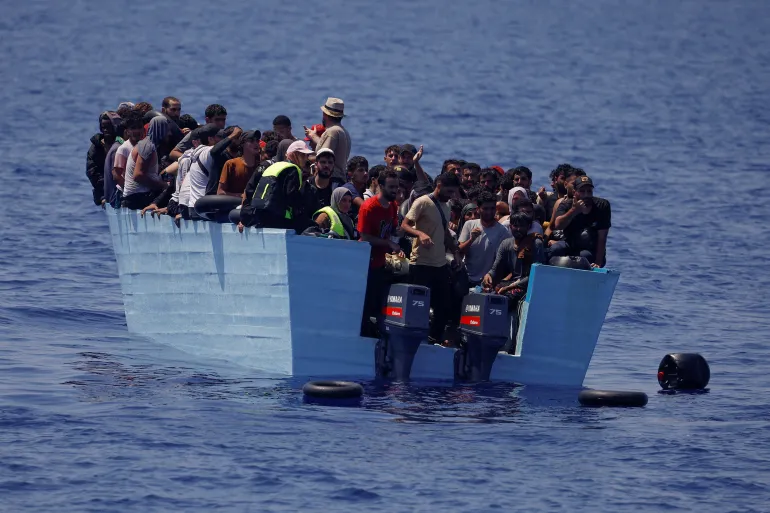
Mauritania’s coastguard rescued 141 West African migrants on 30 November after their boat, which had departed from the Gambia, capsized off the coast near Nouadhibou.
Authorities said on December 1st that the passengers were disoriented and adrift when a maritime patrol spotted them. The group included Senegalese, Gambians, Guineans, and Malians, with three individuals found in critical condition before being handed over to the appropriate services.
The incident is the latest in a series of dangerous crossings towards Spain’s Canary Islands, with Mauritania already rescuing hundreds in recent weeks — including 132 migrants stranded after running out of fuel and 227 others found overcrowded on a fishing vessel, where dozens reportedly died from starvation and dehydration.
Tighter coastal controls by Mauritania, Senegal and Morocco — reinforced through agreements with the European Union and Spain — have pushed migrants to embark from further south, particularly The Gambia and Guinea. Experts warn that this shift dramatically increases the dangers, as longer Atlantic routes heighten the risk of getting lost, capsizing, or suffering severe dehydration during voyages lasting up to a week.
Fatalities remain high: at least 69 bodies were recovered in August after another Gambian vessel capsized, while thousands of migrants continue to die along the Canary route. According to Spanish NGO Caminando Fronteras, more than 10,400 migrants died or disappeared en route to Spain in 2024, with nearly 1,500 fatalities recorded in the first five months of 2025 alone.