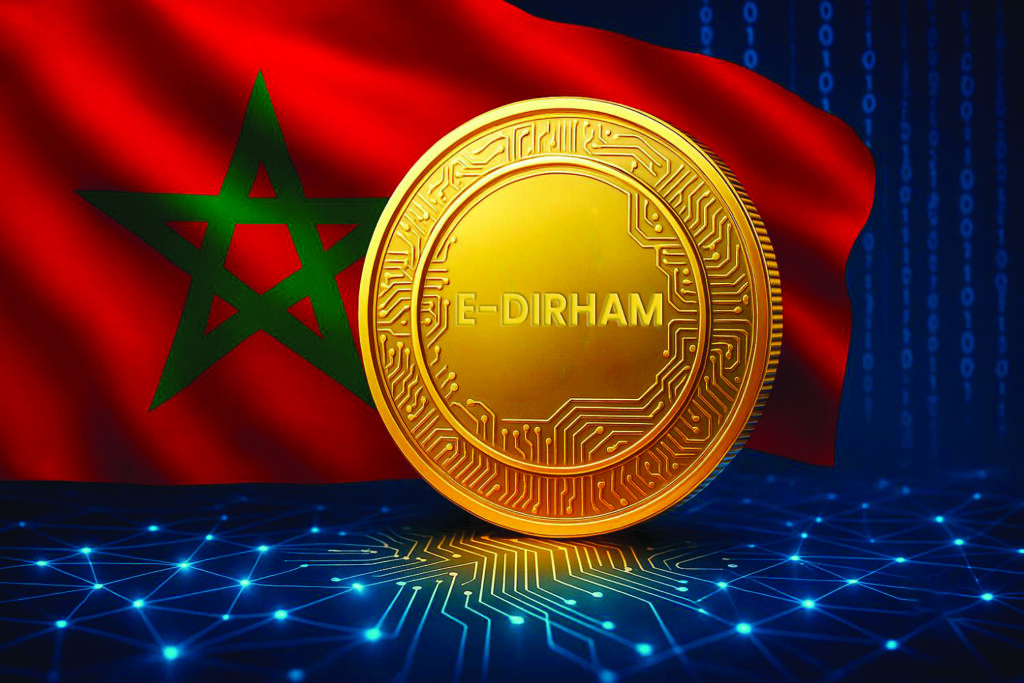
Morocco is advancing plans to launch a central bank digital currency (CBDC), the e-Dirham, as part of a broader push to modernize its financial system and boost financial inclusion.
The central bank governor Abdellatif Jouahri said late September that the project had entered an “advanced study phase,” positioning Morocco among more than 100 countries exploring digital currencies, including early adopters like China and Nigeria.
Speaking days later at the African Digital Payment Forum in Rabat, Hakima Alami, BAM’s head of payment oversight, described the initiative as a strategic priority. “This is a long-term reflection that must balance modernization with financial stability and public trust,” she said.
Unlike cryptocurrencies such as Bitcoin, the e-Dirham would be issued and backed by the Moroccan central bank, maintaining a one-to-one parity with the physical dirham.
While Bitcoin operates on a decentralized, anonymous model, the e-Dirham would function as a state-guaranteed digital alternative to cash, offering stability and traceability.
One of the central motivations behind the e-dirham is to expand financial access. Nearly a third of Moroccan adults remain unbanked, relying heavily on cash for daily transactions. A digital currency, accessible via a mobile app, could allow users to send, receive, and store money securely without needing a traditional bank account.
The move also aims to reduce the high costs associated with cash handling, including printing, transportation, and security. Digital payments could help curb fraud and the informal economy, while streamlining financial flows.
The e-Dirham could also modernize Morocco’s payment infrastructure. Current interbank transfers can take days and often involve multiple intermediaries and fees. A central bank digital currency would enable near-instant transactions with minimal costs and full interoperability between service providers.
For consumers, this could mean paying for groceries, taxis, or utility bills directly from a smartphone, without cash or cards.