Mauritania and Morocco have stepped up their economic ties, signing cooperation deals in fields ranging from the stock market to electric interconnections and airlines.
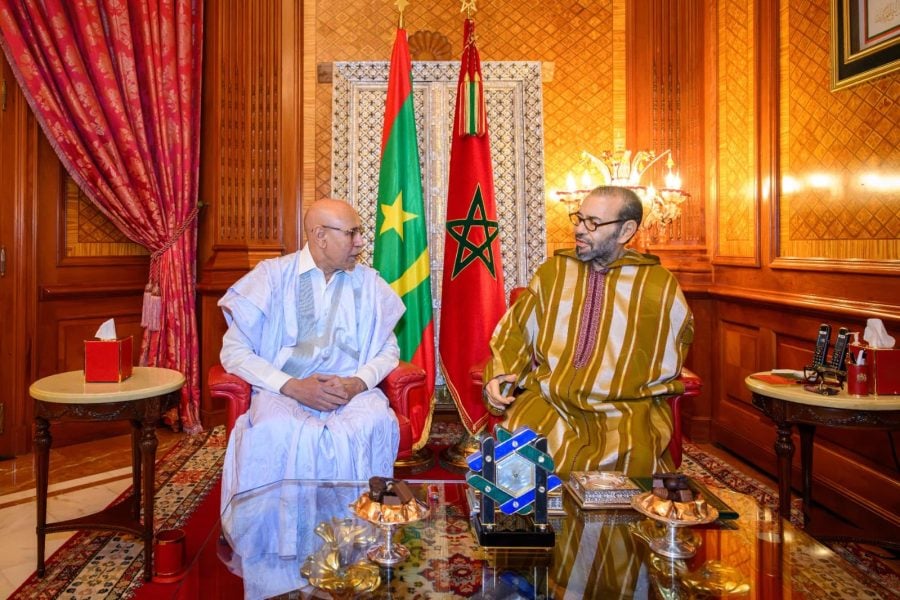
Economic cooperation between the two neighbors stepped up after a meeting between King Mohammed VI and Mauritania’s president Mohamed Ould Ghazouani in Casablanca in December 2024.
During the meeting, the Mauritanian president endorsed the King’s Atlantic Initiative to offer landlocked Sahel states access to global trade through the Atlantic and boost regional integration.
Since the visit, tangible cooperation agreements were signed between the two countries addressing the core needs of the Mauritanian economy: energy, funding, and connectivity.
Few days ago, parliamentarians from the two countries met in Nouakchott to highlight cooperation areas. The meeting came following landmark cooperation agreements.
In February, the two countries signed a deal to connect their grids. Under the deal, Morocco’s electricity utility ONEE shall export electricity to Mauritania to help it expand its network.
Nearly half the Mauritanian population lacks access to electricity with wider gaps between urban and rural areas. Only 89% of urban population has access to electricity, compared to 4% in rural areas.
Casablanca stock market, the second largest in Africa, has also agreed to help Mauritania establish its own stock market.
An agreement was signed in that respect in April with Mauritania’s central bank which seeks Casablanca stock market’s technical, operational and strategic support.
In recent years, leading Moroccan banks and firms launched investments in Mauritania, which has a positive growth outlook as it started to export gas a few days ago.
Mineral-rich Mauritania also seeks to develop its exports and open up to financial markets to improve its investment climate.
It has chosen Morocco which has some of Africa’s most vibrant financial systems and international banks with branches across the continent.
Meanwhile, the two countries have tapped into their land border crossing, a gateway for exports of Moroccan fresh produce to the wider Sahel.
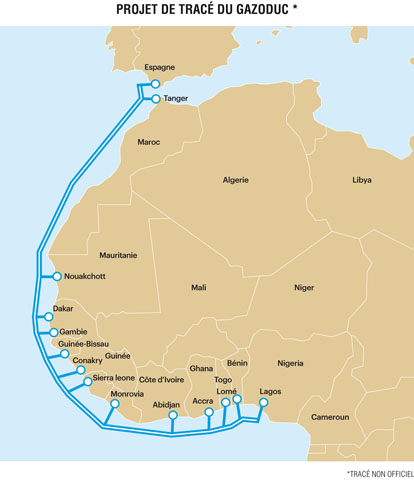
Mauritania, rich with offshore gas, is also a key player in the Atlantic gas pipeline that will link Nigeria to Morocco through 13 West African state.
The first phase of the pipeline will link Morocco to the gas fields of Torture-Ahmeyim offshore Mauritania and Senegal, offering the two West African countries an export outlet to the EU via Morocco.
The two countries are also mulling the opening of a second crossing north of the Moroccan Sahara.
The Moroccan airlines RAM and Mauritania’s MAI have also strengthened connectivity with Mauritania, increasing the total weekly flights between the two countries to nine. The two flag carriers are adding four routes to their codeshare partnership.
The Mauritanian airlines will also be using Morocco’s Casablanca hub.
The recent joint economic initiatives show that Mauritania has chosen Morocco as a development partner, building on neighborliness and centuries-old ties between the two peoples. This economic cooperation will reverberate positively on Mauritania’s stance on the Sahara issue.