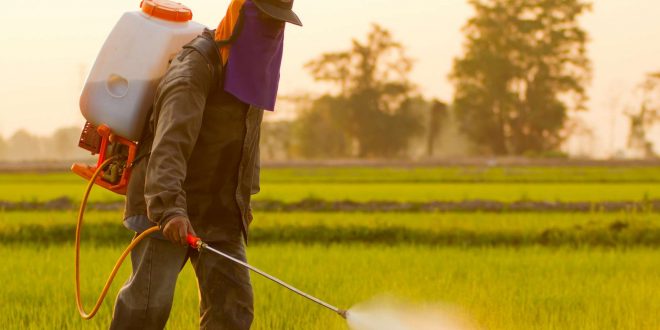
Between 17,000 and 22,000 tons of plant-protection products enter Morocco each year, worth MAD 1.4 billion to 2 billion, while local manufacturing is almost non-existent, according to L’Economiste daily.
The market is free and highly competitive, dominated by private players and subsidiaries of large agrochemical multinationals. Between 70 and 80 licensed importer-distributors operate alongside 25 companies belonging to Croplife Morocco, the association representing the industry. They supply insecticides, which account for 40 to 45% of the market, fungicides (40%) and herbicides (10 to 15%).
About 95% of products are imported ready to use. Only a small share is formulated locally as premixes or concentrates, while 35 to 45% of imports are repackaged in small formats for smallholders, according to professionals’ estimates.
Regulation is tightening. Between 2018 and 2024, the national food safety authority ONSSA withdrew approval for 461 products amid growing health and environmental concerns, and export markets, notably in Europe, which imposes strict limits on pesticide residues. Morocco is gradually adopting biocontrol, natural auxiliaries and preventive methods, particularly for tomatoes, citrus and greenhouse vegetables. The French Chamber of Commerce in Morocco and Team France Export say this costly transition opens an opportunity for less toxic products.
The market is expected to keep growing at an average of 5.2% a year between 2025 and 2031, driven by agricultural development, crop intensification, domestic food demand and pest pressure. Biopesticides and sustainable solutions are expected to grow by about 4.4% a year until 2032. New national and international rules act as barriers to entry for chemical products.