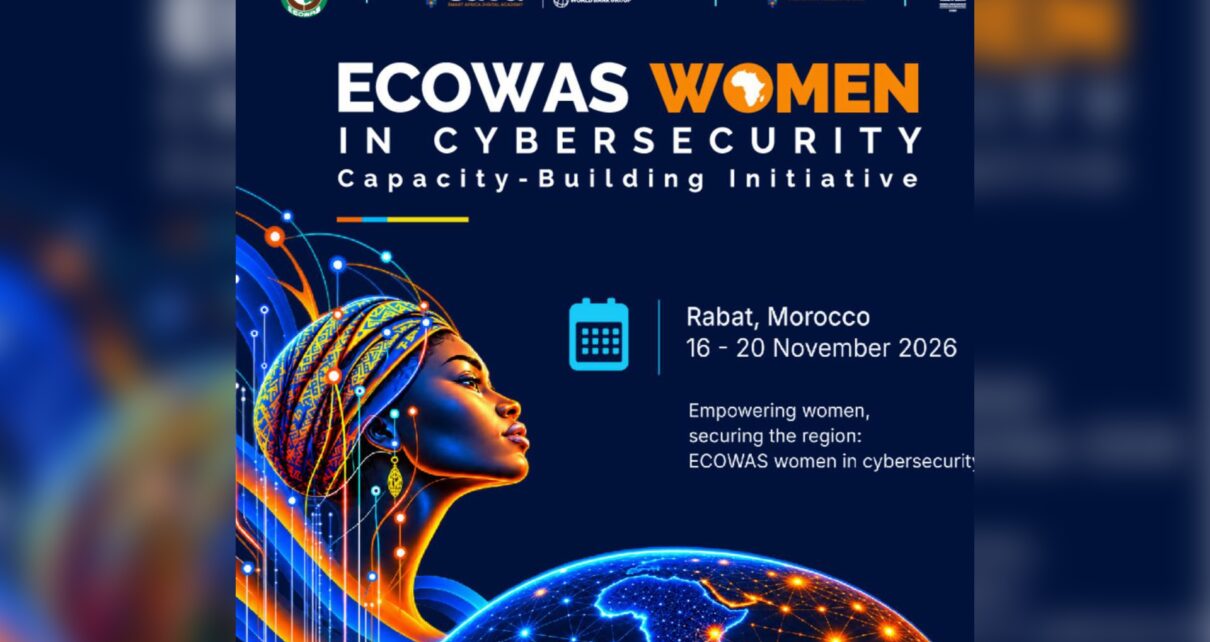
Rabat will host on November 16-20 ECOWAS Women in Cybersecurity week, a regional initiative to promote African women’s leadership in the field of cybersecurity and strengthening their skills, the General Directorate for Information Systems Security (DGSSI) announced in a press release.
The event, organized by the DGSSI, Smart Africa and the World Bank, seeks to encourage the participation of African women in strategic planning and decision-making bodies, as well as in the development and implementation of national and regional cybersecurity strategies, the press release said.
This initiative, led by the Economic Community of West African States (ECOWAS), will bring together representatives from various institutions as well as cybersecurity professionals from different African countries.
The official opening ceremony will feature a speech by Brigadier General Abdellah Boutrig, Vice President of the African Network of Cybersecurity Authorities (ANCA) and Director General of the DGSSI. Over the course of five days, the program will combine strategic conferences, technical sessions, hands-on exercises, cybercrisis simulations, and exchanges of experiences between participants and international experts.
The proceedings will focus in particular on the governance and operations of national computer incident response teams (CERT/CSIRT), the protection of critical infrastructure, cybercrisis management, cybercrime, artificial intelligence applied to cybersecurity, and regional threat intelligence sharing. Significant emphasis will be placed on cooperation between the public and private sectors, as well as coordination among national and regional stakeholders.
Similarly, several professional visits are scheduled to key players in Morocco’s digital ecosystem, the DGSSI says.
The week will highlight by the launch of the ECOWAS Women in Cybersecurity network, which will rely in particular on mentoring programs and a knowledge-sharing platform.
This network aims to foster the emergence of female leaders capable of helping to strengthen the continent’s digital resilience and of playing an active role in the development of national and regional cybersecurity policies, the press release concludes.